


ROSA honoured with Future of Ageing Award

The Registry of Senior Australians (ROSA) Research Centre has been nationally recognised for the success of its Primary Care project, winning a 2025 Future of Ageing Award in the Research category. Researchers analysed how 480,000 older Australians access and experience primary care across home care and residential aged care settings.
The award acknowledges the five-year MRFF funded program, using big data to create evidence-based primary health care service delivery and policy for the Australian aged care sector. The winners were announced at a ceremony at Dockside Darling Harbour in Sydney. ROSA Director Professor Maria Inacio was in attendance to receive the award on behalf of the research team.
Based at SAHMRI, ROSA is supported through an academic partnership with the Caring Futures Institute in Flinders’ College of Nursing and Health Sciences.
Read more on the award at SAHMRI.
A distinguished contribution to psychological science
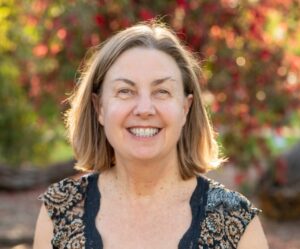
Congratulations to Professor Tracey Wade, College of Education, Psychology and Social Work, who recently received an Australian Psychological Society national award for Distinguished Contribution to Psychological Science. The awards recognise the people who improve the mental health and wellbeing of Australians through psychology.
Professor Wade is an internationally recognised researcher and clinician with a specialisation in eating disorders and perfectionism.
She has over 300 peer-reviewed publications, 14,608 citations (Scopus), an h-index of 60, and a total of $7.7M in competitive research grant funding. Her research has contributed to making eating disorders a priority mainstream health issue. She is currently funded by a prestigious NHMRC Investigator Grant to evaluate transdiagnostic approaches to early intervention for youth with disordered eating. Read more about her win here.
Finalists in the WA Premier’s Science Awards
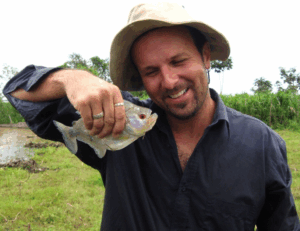 Congratulations to Professor Luciano Beheregaray and his team on their contributions to the Westport Marine Science Program which was a finalist in the WA Premier’s Science Awards. The Flinders team worked on a three-year contract with Western Australia’s Department of Primary Industries and Regional Development, to assess fisheries sustainability in relation to the new $7-8 billion container port planned for Kwinana in Cockburn Sound, WA.
The team has now developed one of the most comprehensive datasets for any marine location in Western Australia.
This contract stemmed from other recently finished ARC Linkage and Fisheries Research and Development Corporation projects.
As well, Professor Beheregaray was invited to add his comments on a research briefing entitled ‘Gene flow between mountainous birds buffers climate change risk’ published in Nature Climate Change.
3m hits sets Conversation record

Emeritus Strategic Professor of Palaeontology John Long this month extended his lead in the University’s November readership in The Conversation to reach more than 3 million total reader ‘hits’ on the popular platform.
As the first Flinders author to reach 3m reads, Professor Long is one of 73 Conversation authors worldwide to reach this record (out of 26,581 total contributors).
Over the years, The Conversation has published more than 1300 articles by Flinders University authors which have amassed almost 39 million reads.
They include other leaders Associate Professor Alice Gorman (with more than 2.85 million), Professor Corey Bradshaw (2.29m), followed by Professor Mike Lee, Dr Kacie Dickinson, Professor Justine Smith and Associate Professor Rob Manwaring who have accumulated more than 1 million readers for their articles.
“It’s taken me 12 years and 58 articles to get to 3 million,” says Professor Long, from the College of Science and Engineering Palaeontology Lab.
Several of his most successful articles have been about the giant prehistoric shark ‘megalodon’, and about the Jurassic World Hollywood dinosaur movies. His wife, Flinders PhD Dr Heather Robinson, has been a regular coauthor with her background studying film theory.
This year alone, his eight articles have gathered more than 518,00 hits – with one of them ‘Jaws at 50: How a single movie changed our perception of white sharks forever’ (274,054 hits) the third-largest most-read behind ‘Giant monster megalodons lurking in our oceans: be serious! (2016, 787,741 hits) and ‘Creating dinosaurs: why Jurassic World could never work’ (2015, 320,755).
“I had never heard of The Conversation until one of the editors approached me just after taking a position at Flinders to write a story about what we know of dinosaur sex.”
Professor Long’s first article ‘Big bang theory: How did dinosaurs have sex?’ (2013, 34,370 hits) was commissioned after his book Hung Like an Argentine Duck, about the evolution of sex, was published. He had just taken up his new position at Flinders University.
Among his research and science articles are ‘The oldest fish in the world lived 500 million years ago’ (115,268 hits), ‘Curious Kids: How many dinosaurs in total lived on Earth during all periods?’ (79,215), ‘When fish gave us the finger: this ancient four-limbed fish reveals the origin of the human hand’ (70,757) and ‘Exceptional new fossil fish sparks rethink of how Earth’s geology drives evolution’ (with coauthor Dr Alice Clement, 69,925 hits).
The latest book review of Luke Kemp’s Goliath’s Curse has had more than 34,000 reads this month – largely in the USA – and he has recently contributed his selections to “Best Books of 2025” (along with Flinders academic Dr Intifar Chowdhury).
The Conversation reports that of the top 10 most-read authors at Flinders University, six are from, or have published in, the Science category.