
Opinion
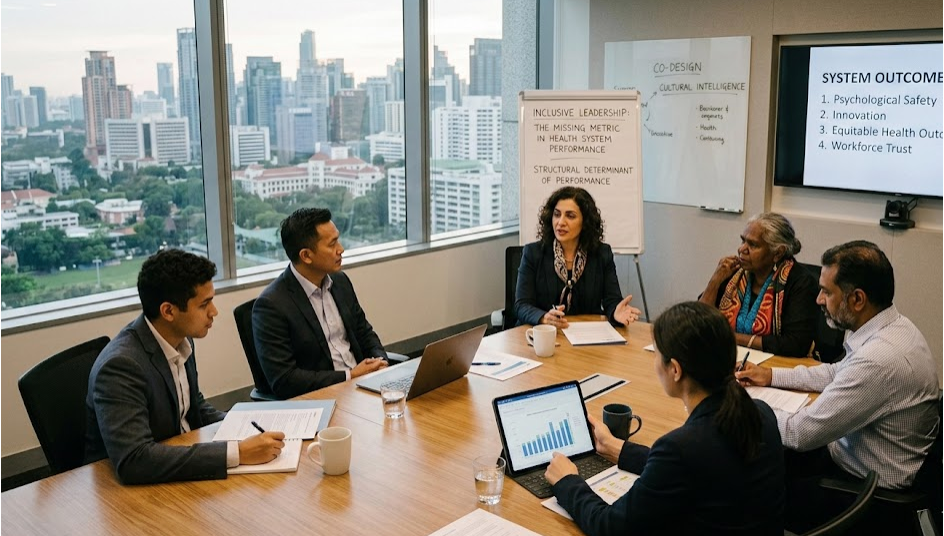
Inclusive leadership in healthcare is not a moral aspiration; it is a structural determinant of health system performance. In the Asia-Pacific, some of the world’s diverse health systems are led through culturally narrow structures. Without psychologically safe, inclusive environments, organisations risk workforce instability, weakened trust and poorer patient outcomes.
—-
Healthcare systems across the Asia-Pacific are among the most diverse in the world. Migration, demographic shifts, Indigenous health inequities, and socioeconomic disparities shape both the workforce and the communities served. Yet leadership structures often remain culturally narrow and hierarchically rigid.
Coming from a culturally and linguistically diverse background, with formative education in a low-income country and professional work across Australia, the Middle East, and the Asia-Pacific, I have seen how institutions frequently assume neutrality while operating through invisible norms. Transitioning into unfamiliar systems, navigating limited informal networks, and working as a woman in technology-intensive leadership domains such as digital health and AI revealed a persistent pattern: representation without inclusion is fragile. My work alongside Aboriginal communities in Central Australia further reinforced a critical lesson.
Cultural safety, co-design, and trust are not optional add-ons. They are preconditions for meaningful health innovation. As the World Health Organization continues to emphasise, workforce equity and inclusive governance are foundational to resilient health systems (https://www.who.int/publications/i/item/9789241511131). These lived and professional experiences converge on one conclusion: inclusive leadership is not symbolic. It is a structural capability.
Inclusion Is Not Diversity
Diversity counts representation. Inclusion determines influence. A health system cannot claim cultural competence if its own leadership voices are culturally narrow. Many health systems report diversity statistics, yet decision-making spaces remain few. CALD professionals, migrant clinicians, women in digital health, and minority groups are often present in operational roles but underrepresented in executive leadership. When voice does not translate into authority, diversity becomes cosmetic.
Across many Asia-Pacific contexts, particularly those shaped by strong hierarchical cultures, the absence of inclusive leadership suppresses dissent and limits innovation. Psychological safety, a key predictor of team performance and clinical quality, becomes compromised. The consequences are operational, not theoretical.
Health system performance depends on workforce trust and stability. Research demonstrates that psychologically safe environments improve incident reporting, strengthen team-based care, reduce burnout, and enhance innovation (https://doi.org/10.1093/haschl/qxae091). Where professionals from diverse backgrounds feel unheard or marginalised, organisations may experience increased turnover, disengagement, and reduced discretionary contribution. This dynamic is particularly acute in multicultural health systems. Countries such as Australia, Singapore, and several Gulf countries rely heavily on internationally trained clinicians (https://doi.org/10.1186/s12960-024-00900-5). However, progression pathways into senior leadership roles do not consistently reflect the demographic diversity of frontline clinical workforces.
When inclusion does not extend beyond recruitment into decision-making structures, safety risks emerge. Cultural hierarchies, power distance norms, and unaddressed bias can inhibit upward communication and delay escalation of clinical concerns. Hierarchical barriers and low psychological safety are associated with reduced reporting and learning behaviours in healthcare settings (https://doi.org/10.1136/qhc.13.suppl_2.ii3). In diverse teams, internationally trained clinicians may hesitate to challenge authority, even when clinical deterioration is recognised, reflecting structural silence rather than competence gaps. Leader inclusiveness has been shown to increase team voice and quality improvement engagement (https://doi.org/10.1002/job.413). Inclusive leadership therefore, operates as a system performance variable, directly influencing safety culture, retention, and quality outcomes.
Why This Matters in the Asia-Pacific
The Asia-Pacific region is characterised by simultaneous innovation and inequity. Australia provides a clear example. Despite advanced digital infrastructure and rapid expansion of telehealth and AI-supported health technologies, significant disparities persist between metropolitan and remote communities, particularly for Aboriginal and Torres Strait Islander peoples. Indigenous Australians experience disproportionately poorer health outcomes, lower life expectancy, and higher burdens of chronic disease (https://www.aihw.gov.au/reports/australias-health/indigenous-health-and-wellbeing).
Digital transformation alone does not resolve these disparities. Research in digital health implementation demonstrates that technologies developed in urban, high-resource settings often perform poorly in remote or culturally distinct communities due to infrastructure gaps, linguistic differences, and misalignment with local models of care (https://www.jmir.org/2023/1/e42719). Telehealth expansion during COVID-19 improved access in some areas, yet sustained uptake in remote Indigenous communities has required culturally adapted service models and trusted local intermediaries (https://doi.org/10.1186/s12913-023-09265-2).
Cultural safety literature consistently emphasises that trust in healthcare systems is relational rather than technological (https://doi.org/10.1177/135581962110418). Without inclusive governance, workforce diversity, and genuine community partnership, digital reforms risk reproducing existing inequities. In this sense, health innovation without inclusion does not merely under perform, it can erode system legitimacy. Trust, among staff and communities, therefore, becomes the currency of resilience in reforming systems.
From Representation to Responsibility
Inclusive leadership must translate into operational structures. As outlined in Table 1, inclusive health system performance can be organised across five interlocking dimensions: decision-making inclusion, psychological safety, leadership pathways, cultural intelligence, and digital governance. Each dimension links directly to measurable system outcomes, from reducing strategic blind spots to strengthening retention, safety culture, service equity, and innovation capacity.
Table 1: Leadership Actions for Inclusive Health System Performance
| Dimension | Leadership Action | System Impact |
| Decision-Making Inclusion | Ensure diverse representation in executive and board-level processes | Reduces strategic blind spots |
| Psychological Safety | Institutionalise structured listening and safe reporting systems | Improves safety and innovation |
| Leadership Pathways | Transparent mentoring and promotion for underrepresented professionals | Strengthens retention and sustainability |
| Cultural Intelligence | Embed cultural safety competencies in executive performance metrics | Builds trust and service equity |
| Digital Governance | Require community co-design in AI and digital health initiatives | Prevents technological inequity |
The central takeaway is this: inclusion is not a peripheral human resources issue. It is a governance and performance imperative. When diverse representation is embedded in executive decision-making, when structured listening systems are institutionalised, when leadership pathways are transparent, when cultural intelligence is embedded in performance metrics, and when digital initiatives require community co-design, inclusion shifts from aspiration to infrastructure.
Inclusion must therefore be evaluated alongside financial performance and clinical outcomes. Boards and executives should treat it as a measurable leadership competency, not a discretionary value.
Leading Beyond Diversity
Inclusive leadership is not a social add-on. It is a strategic necessity. As health systems confront workforce shortages, digital acceleration, and demographic change, leaders who fail to cultivate psychologically safe and culturally responsive environments will struggle to retain talent, sustain innovation, and maintain public trust. The experience of multicultural systems such as Australia demonstrates that digital reform and workforce diversity alone do not guarantee equity or resilience; without inclusive governance and culturally safe leadership, disparities persist.
Conversely, systems that embed inclusion into governance structures, executive accountability, and leadership development strengthen innovation capacity, workforce stability, and community trust. When internationally trained clinicians are supported into decision-making roles, when Indigenous partnerships shape digital implementation, and when speaking-up cultures are institutionalised, performance improves because legitimacy improves.
Across the Asia-Pacific, the next chapter of health leadership must move beyond representation toward responsibility. Inclusion must be institutionalised, not announced. Technology will shape the future of healthcare. But performance, safety, and trust will ultimately be determined by something more fundamental: who is heard, who is valued, and who is empowered to lead.
About the author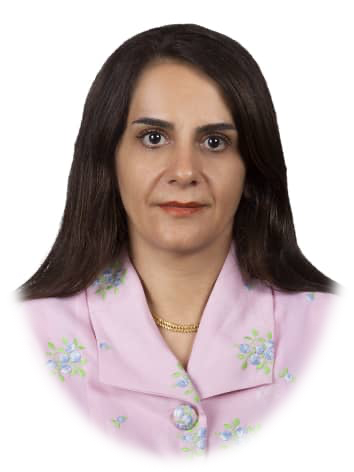
Peivand Bastani BSc, MSc, MPH, PhD, SFHEA is a health care management thought leader and health systems expert at Flinders University, Adelaide, Australia. She works across Australia and the Asia-Pacific. Her work spans inclusive health leadership, digital health and AI governance, and culturally responsive system design. Drawing on experience across low-income, multicultural, and Indigenous health contexts, she focuses on strengthening trust, equity, and performance in complex health systems.
About Health Leadership Insights
 Health Leadership Insights is a thought leadership platform led by healthcare academics and researchers at Flinders University, Adelaide. We bring rigorous, evidence-grounded, and constructively critical perspectives on healthcare management education, training, and systems innovation across Australia, Asia-Pacific, and globally.
Our series features:
- Editor’s Desk essays examining defining challenges in healthcare management and systems transformation
- Opinion pieces from practitioners sharing insights from the field
- Stories from inside healthcare transformation showcasing real-world leadership challenges and solutions
- Expert interviews with healthcare leaders, innovators, and researchers working at the frontlines
Our commitment is to elevate healthcare leadership discourse. To surface solutions emerging from Asia-Pacific’s own healthcare leaders. To ask hard questions about what works. To build thought leadership grounded in regional evidence and informed by the voices of those managing health systems daily.
Submission is by invitation only. If you are interested in submitting an article, please contact the editors directly.

© 2026 Flinders University. This segment is part of Flinders Blogs Portal, and run by the Flinders Healthcare Management Team.