


For PhD-MBA student Imanthi Illeperuma, choosing Flinders University was the first step towards combining her passion for neuroscience with a drive to translate discoveries into real-world change.
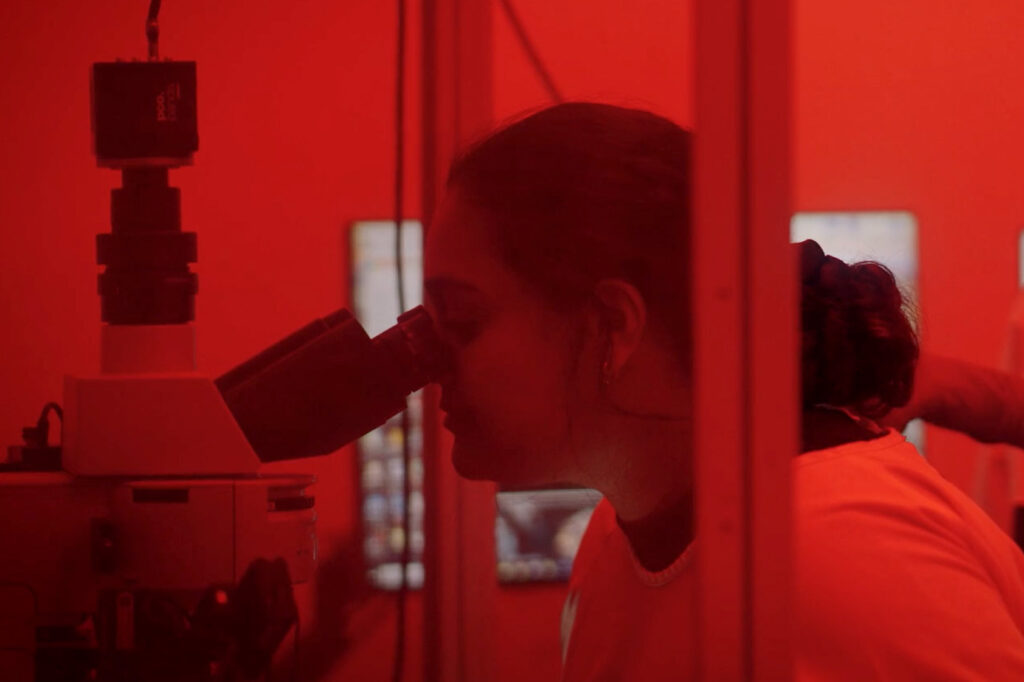
Imanthi’s research is based in the Bardy Lab at the South Australian Health and Medical Research Institute (SAHMRI), where she is modelling Parkinson’s disease using reprogrammed patient cells.
“We reprogram skin cells derived from patients and healthy individuals into neurons and create models that carry the same genetics as the person they came from. Through this method, I study how people’s neurons respond to environmental stresses like pesticides, without needing to directly test on patients or rely on animal models.”
Volunteering in aged care during high school, and seeing the impact of dementia and Parkinson’s firsthand, is what ignited her passion for neuroscience. Her research journey then began with a Bachelor of Medical Science (Honours) at Flinders, and volunteering in the Bardy Lab early in her studies shaped her decision to pursue HDR.
“Cutting-edge neuroscience research and technologies at the Bardy lab really inspired me to continue my research journey at Flinders.”
The launch of the combined PhD-MBA program provided the unique pathway she was looking for.
“This program really reflected the type of scientist I aspire to be; one who not only contributes to advancing critical knowledge but also understands how to translate discoveries into broader societal impact.”
Alongside her scientific work, Imanthi has embraced the broader skills of leadership, strategy and innovation offered through her MBA. Practical experiences, including co-designing high-throughput lab experiments and a placement with the Flinders Research Commercialisation team, have given her valuable insight into how discoveries move from “bench to market.”
For Imanthi, the human element of medical science remains at the heart of her motivation.
“The human brain is extraordinary, and despite years of research, we are only just beginning to grasp the complexity of neurodegenerative diseases.”
She hopes to continue contributing to neurodegenerative disease research while building a career in neuroscience and med-tech leadership. She encourages prospective Honours and HDR students to make the most of the opportunities at Flinders.
“Take the initiative to connect with people early on. Speak with lecturers, researchers, and senior students to learn from their experiences… Above all, remain curious and open-minded.”
At Flinders, Imanthi has found more than just a place to study. She has discovered an environment where research is collaborative, impactful, and deeply connected to people’s lives.
“For me, studying at Flinders has shown that science is not only about discovery, but about giving people hope for a better tomorrow”.
An Honours degree allows you to build on your Bachelor studies, deepen your knowledge and expand your networks. Apply for an Honours year