

Bowel cancer is one of the most common cancers in Australia, but when detected early, it can often be successfully treated and in some cases, prevented.
At Flinders Health and Medical Research Institute, researchers are working across the bowel cancer pathway to improve outcomes for more Australians. From earlier diagnosis in younger people, to better diagnostic tools, improved screening participation and research that has shaped national programs, FHMRI researchers continue to play a leading role in bowel cancer prevention, detection and care.

Improving diagnosis for younger Australians
Associate Professor Erin Symonds, Bowel Health Service Lead at Flinders Medical Centre and Co-Director of the Cancer Impact Program at FHMRI, is working to improve health services and diagnostic tests for bowel cancer investigation, as well as optimise surveillance for people at elevated cancer risk.
She has recently received funding through the 2025 Cancer Australia Research Initiative Targeted Call for Research into Early-Onset Cancer for her project, Next-Generation Screening: a risk-based model for the timely detection and prevention of early-onset colorectal cancer. The project will investigate risk factors for bowel cancer in younger people and explore simple blood and stool tests that could support targeted, earlier detection.
This work is particularly important as bowel cancer in Australians under 50 is rising, and Australia has one of the highest rates of young-onset bowel cancer globally. By focusing on younger people who are not routinely captured through national screening, Associate Professor Symonds and her team are working to address a critical gap in early detection.
Improving equity in cancer screening
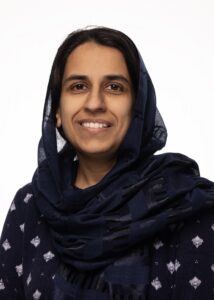
Dr Sana Ishaque is focused on improving equity in cancer screening participation, particularly among culturally and linguistically diverse communities.
Aligned with the priorities of the Australian Cancer Plan 2023–2033, Dr Ishaque’s work aims to reduce disparities in bowel and lung cancer screening uptake among Arabic-, Chinese- and Vietnamese-speaking communities in Australia.
Her project will explore what helps or hinders participation in screening programs and co-design culturally appropriate resources to improve awareness, attitudes and screening behaviours. Dr Ishaque has been awarded the 2026 Cancer Council SA Mid-Career Fellowship in Public Health/Health Services to support this work.
Advancing biomarker and diagnostic research
Associate Professor Michael Michael leads the Gene Expression Laboratory at the Flinders Centre for Innovation in Cancer, where his work also includes biomarkers
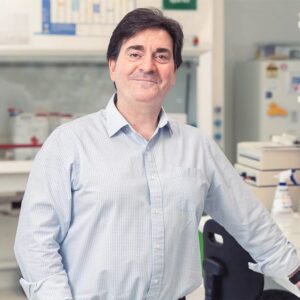
for colorectal cancer and the development of diagnostic tests that can inform clinical decision-making.
His research has contributed to a deeper understanding of the molecular signals associated with cancer, involving epigenetic processes and non-coding RNAs, including microRNAs. This work supports FHMRI’s broader focus on improving detection and identifying new ways to better understand, diagnose and treat bowel cancer.
Discovering biomarkers to support personalised care

Dr Jean Winters leads the Biomarker Discovery and Application Program within the Bowel Health Service, which aims to improve early-stage cancer diagnosis and treatment outcomes for patients with bowel cancer.
The program is focused on discovering and applying new and existing biomarker tests that are more sensitive and specific for bowel cancer, using blood and faecal samples.
Recent work published in the International Journal of Cancer and Clinical and Translational Medicine highlights how a blood test that detects circulating tumour DNA can be effective in monitoring treatment response and recurrence of bowel cancer in patients who have undergone curative-intent treatment.
Using this type of non-invasive test could provide a more personalised approach to bowel cancer treatment and surveillance, helping clinicians better understand how a patient is responding to treatment and whether cancer may have returned.
This work has the potential to significantly improve patient outcomes by supporting earlier intervention, more tailored follow-up and more informed clinical decision-making.
A legacy of national impact
FHMRI’s bowel cancer research builds on the pioneering work of Emeritus Professor Graeme Young AM, whose research helped lay the foundation for the National Bowel Cancer Screening Program. The program has become a critical part of Australia’s approach to bowel cancer prevention and early detection.
Professor Young’s work demonstrates the long-term impact research can have when evidence is translated into national health programs. Today, FHMRI researchers continue to build on this legacy by developing new strategies to improve screening, diagnosis and outcomes for people at risk of bowel cancer.
Research across the full bowel cancer pathway
Together, these researchers highlight the breadth of bowel cancer research at FHMRI, from population screening and health equity, to early-onset cancer, biomarkers and diagnostic innovation.
Their work reflects a shared goal: to detect bowel cancer earlier, reduce disparities in screening and care, and improve outcomes for more Australians.
Find out how you can get involved this June bowelcanceraustralia.org