

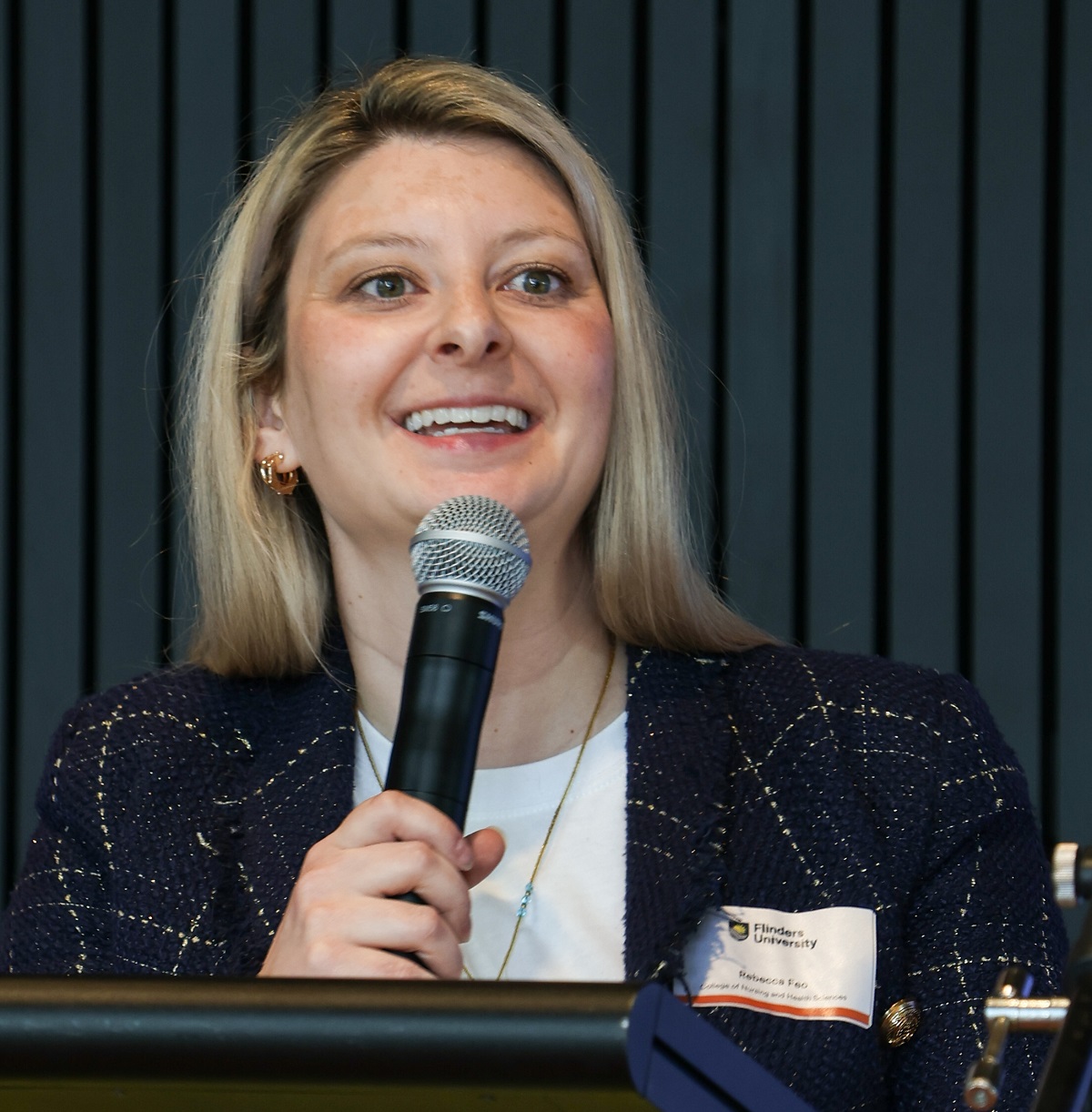
We sat down with World Top 2% Scientist Dr Rebecca Feo to chat about the honour of making the top 2% list and the importance of healthcare communication. She shares how her young family has brought about a new inspiration for her, and why being named one of the best researchers in the world is just the first step.
What is your role here at Flinders?
I am a Senior Research Fellow, and this year began my role as the College’s inaugural Nexus Scholar, enabling me to upskill in teaching alongside my research role. I’ve been fortunate to become part of the CNHS Health Sciences teaching team and have been mentored by some wonderful teaching colleagues.
How did you get into this line of work?
My research career began looking at healthcare communication in the context of men’s help-seeking. After working at a not-for-profit for a few years upon qualifying for my PhD, I was looking to get back into academia. I applied for a research role in fundamental care, which re-ignited my passion around healthcare communication and the importance of therapeutic relationships between healthcare professionals and patients (or clients). The therapeutic relationships formed between professionals and patients (and their families/carers) are one of the key mechanisms through which high-quality healthcare is achieved. And these relationships are often what matter most to patients. Therapeutic relationships are particularly important for fundamental care delivery, which often centres around intimate tasks, such as bathing or toileting. Being helped with these needs can be a source of embarrassment, distress, or frustration for patients. Ensuring these needs are met in a relationship-centred manner, sets a foundation of trust and enables healthcare professionals to provide optimal care for their patients.
Congratulations on being named amongst the World Top 2% Scientists! What does the recognition mean to you?
This is an incredible recognition. My team and I have undertaken substantial advocacy work over the last 10 years, arguing for the importance of relationship-centred fundamental care and demonstrating why this care should be the foundation of healthcare systems globally. It hasn’t always been an easy journey and there is still a way to go, but being named amongst the World Top 2% scientists shows that our research is needed. It’s a powerful motivator to persist and keep moving forward. It’s also an honour as a mid-career researcher to be named alongside such experienced and successful researchers globally.
What’s your favourite part of your work?
Getting to work with so many wonderful researchers, particularly internationally. I have an incredible network of collaborators who are passionate about enhancing therapeutic relationships and transforming fundamental care. Connecting with these colleagues (virtually or in-person) always reignites my passion for the area.
Who inspires you?
Now that I have a young family, the people who inspire me most are those who find a way to make the demands of academia and family-life work. Working within a culture and with research and academic leaders who recognise the importance of employees’ family and social relationships is really important.
How do you spend your spare time?
I wish I could say I had a fascinating hobby, but I spend most of my spare time running after my three-year-old son!