


Roger is doing Dangerously Well
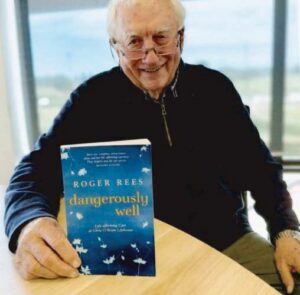
Emeritus Professor Roger Rees, who specialises in Disability and Research in the College of Health and Enablement, has spent more than 25 years involved in the rehabilitation and education of people with brain injury.
In his book, Dangerously Well, which will be launched on 5 July, Professor Rees writes about his experience in 2018 when his dear friend Anne Marks was diagnosed with a rare type of salivary gland cancer. Dangerously Well is an elegant testament to Anne’s journey – and those of other patients – from good health to end of life through the remarkable palliative care given by doctors at the Chris O’Brien Lifehouse in Camperdown in Sydney.
You can listen to Professor Rees appearing on the ABC Science Show here or read about the launch in the Victor Harbor Times here.
New research leader brings global expertise
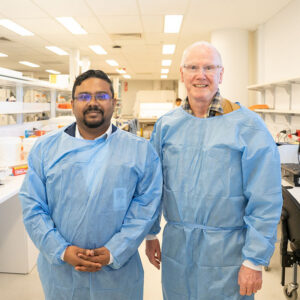
A new era in ovarian cancer research is underway, with the appointment of Dr Arnab Ghosh as the Marion McCormack Research Fellow in Ovarian Cancer Early Detection through Flinders University.
After returning from the Mayo Clinic in the United States, Dr Ghosh is leading research aimed at finding this disease sooner, when more treatment options are available and outcomes are stronger.
This work is a powerful example of how generosity can make a real difference, thanks to the legacy of Marion McCormack through Flinders Foundation.
Using lived experience to make emergencies safer
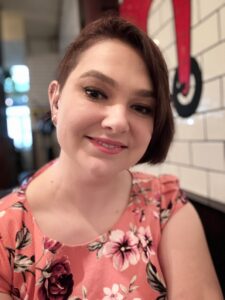
Congratulations to Dr Belinda Fuss who received the Australasian Society for Autism Research (ASfAR) Margot Prior 2026 award under the Autistic researcher category. Belinda is the Lived Experience Lead at the Flinders University Autism Research Initiative (FARI) at the Flinders University Institute for Mental Health and Wellbeing.
Dr Belinda Fuss’s project, ‘Elevated risk of harm associated with autistic children at risk of elopement: a multi-setting practical consultation on the needs of children and caregivers during an environmental-based emergency,’ is part of a larger effort aiming to develop needs-based instructions for emergency services, using the experiences of caregivers and autistic adults in different environments to make emergency rescues physically and psychologically safer for autistic children.
‘Fraud and Society’ launches in Cambridge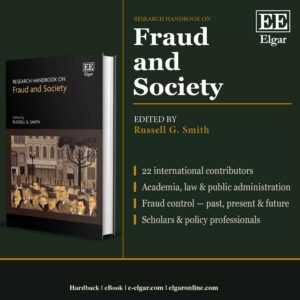
The insightful Research Handbook on Fraud and Society edited by Dr Russell G. Smith, Academic Status Professor in the College of Business, Creative Arts, Law and Social Sciences, has been published by Edward Elgar Publishers in the UK. It comprehensively analyses the current state of research on fraud and society, including chapters written by 30 internationally recognised scholars and practitioners. With a particular focus on digital technology, it explores how to enhance fraud research, minimise criminogenic environments, improve early detection of fraud and support victims.
The Handbook will be launched at a special Panel at the 38th Cambridge International Symposium on Economic Crime at Jesus College, Cambridge on 25 August 2026 with most of the authors speaking about their contributions. In December 2026, the Handbook will also be discussed at the Australian and New Zealand Society of Criminology Conference hosted by Flinders. Other contributors will also be speaking about their chapters.
ARC opens to help preserve the past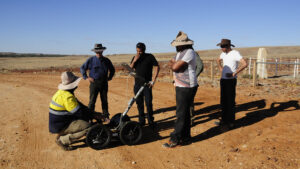
The ARC Training Centre for Archaeology in the Resources Sector has officially commenced, marking a major milestone in advancing research, training and industry collaboration across Australia.
The Training Centre brings together three leading universities in this field led by Flinders University in collaboration with The University of Queensland and Southern Cross University and works in partnership with Traditional Owner organisations and industry. Together, the Training Centre will develop the next generation of archaeologists equipped to address the complex challenges of heritage management in resource-rich environments.
Training Centre Director Professor Liam Brady, who was recently awarded the prestigious Matthew Flinders Professorship said the Training Centre provides a unique opportunity to build new knowledge, foster collaboration, and create lasting impact across industry and communities.
“Our purpose is to train future leaders who can navigate the complex intersection of archaeology, cultural heritage, and the resources sector, while working closely with Traditional Owners and industry partners to deliver practical outcomes.”
Industry partner Sean Freeman, Managing Director of Australian Heritage Services, says the Centre will help reshape practice across the sector. “This Training Centre has the potential to change how archaeology is done in Australia by recognising the cultural knowledge of Traditional Owners and supporting culturally appropriate, on Country training.”
Over the coming years, the Training Centre will support PhD candidates and early-career researchers, undertake collaborative research projects, and contribute to improved cultural heritage management practices nationally and internationally.