

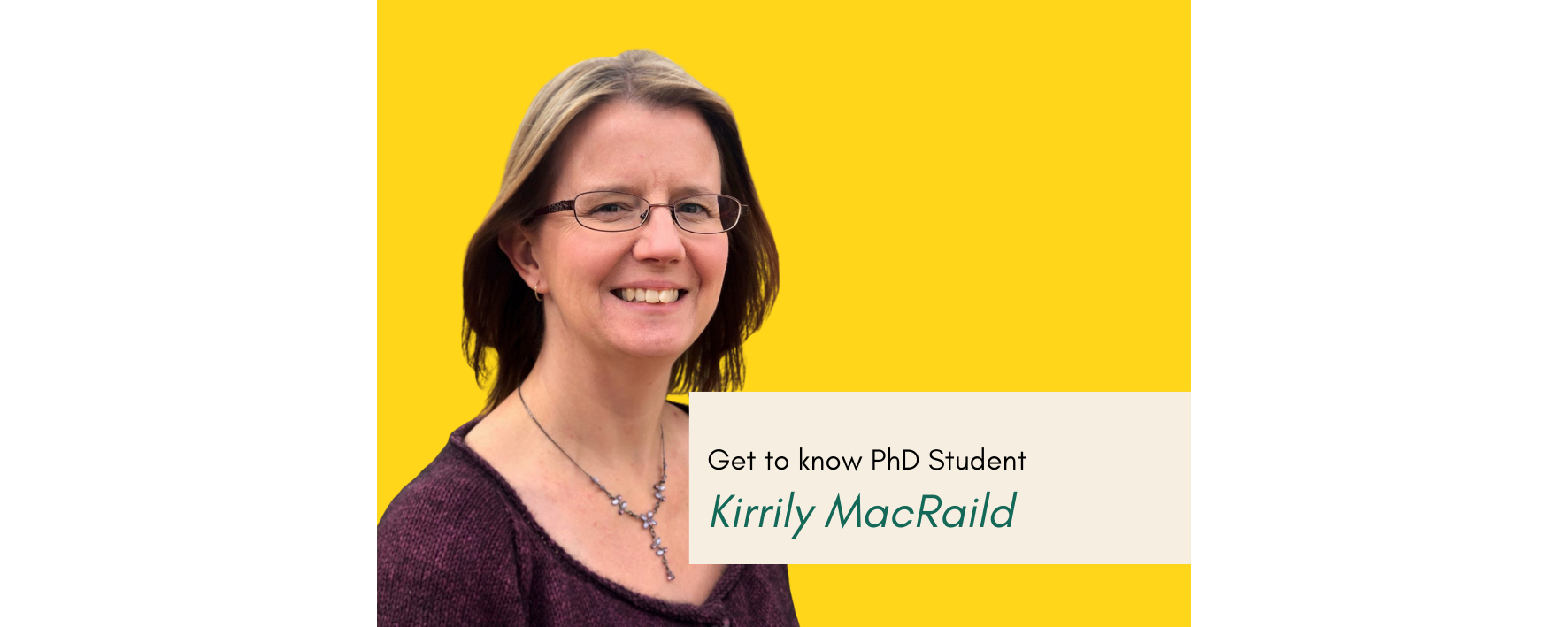
In this month’s newsletter, we would like to introduce PhD graduate, Kirrily MacRaild from College of Humanities, Arts and Social Sciences
Kirrily’s recently submitted thesis, “Ordinary Trauma and Everyday Empowerment: The Life-writing of Defence Children in Australia” received outstanding results from the examiners.
We asked Kirrily to share what her research was about and what led to a PhD and the hardest and enjoyable parts of the journey.

What was your research about in 1-2 sentences?
My research explores how maintaining a practice of life writing (eg. diary writing, memoir) can empower children from military families to have a voice in the broader Australian military narrative, as well as offset the threats that come from living a military lifestyle.

What led you to undertake a PhD? What inspired or motivated you?
Almost a decade ago I explored the lived experience of children from military families as part of my Master of Arts degree and discovered that there was very little research in this area, especially in Australia. Several friends – who are also the children of veterans – read my MA research and resonated with my experience as the child of a soldier. They encouraged me to continue to research in this area as we collectively realised that there was so much more to uncover in terms of the impacts of growing up alongside the preparation for war. That I was able to undertake this research through the creative-led method was very motivating as I could combine my love of research with my passion for creative writing. Undertaking the PhD has enabled me to delve deeper into the experiences of military children and I hope that my findings will help make a meaningful and practical contribution to the lives of other children from military families.
What was been one of the most enjoyable parts of the journey?
As an external student (based in Melbourne), I have really enjoyed connecting online with other PhD students from Flinders. Connecting with students from different disciplines and places has enabled me to feel part of a bigger research community while giving me new perspectives on my own work. While we initially met as peers with the aim of writing together, over time we got to know each other as friends. We have celebrated each other’s successes and helped carry one another through the challenges – both academic and personal. I cherish these friendships and look forward to our in-person catch-ups when we are all in the one location.
What was been one of the hardest parts of the journey?
One of the things I struggled with the most throughout my PhD journey was imposter syndrome. A good antidote to this was surrounding myself with a team of people who valued me and understood the value of my work. In my moments of doubt, I had a personal cheer squad to remind me that I belonged in the degree and that my research mattered.