


Meet Dr Andrew Hayles, a Postdoctoral Research Associate in the Biomedical Nanoengineering Laboratory at Flinders University. With a unique background that bridges microbiology, biotechnology, and biomaterials, Andrew is dedicated to enhancing the effectiveness of antibiotics through innovative technologies. His research delves into the interactions between pathogenic microorganisms and various materials or environments, aiming to sensitise these pathogens to antimicrobial drugs. Andrew also plays a pivotal role in mentoring the next generation of researchers, supervising eight HDR students while contributing to multiple projects.
What is your role and what does your work focus on?
My current role is as a Postdoctoral Research Associate in the Biomedical Nanoengineering Laboratory. My background sits at the interface between microbiology, biotechnology and biomaterials. Currently my main focus is on antibiotic potentiation technologies, which means I try to find new ways to improve the activity of antibiotics – through surface modifications and/or combination therapy with multiple compounds. In particular, I am keenly focused on how pathogenic microorganisms respond to different materials or environments and how these responses can be manipulated to sensitize them to antimicrobial drugs. I am also currently supervising 8 HDR students, and I therefore have the pleasure of being involved in many other related projects.
Where did you work and / or study before joining CMPH / Flinders?
 I was previously employed as a Research Assistant at University of South Australia, working on an industry-funded project to develop antimicrobial surface modifications for orthopaedic and periodontal implants. While working on this, I enrolled as a Masters student. Shortly after, I transferred to Flinders University, following my supervisor Prof. Krasimir Vasilev who moved at the same time. During this transfer, I upgraded from a Masters to a PhD at Flinders University, and I went on to complete this in 2023.
What inspired you to pursue a career in your current field, and how has your passion evolved over time?
I first became interested in science when I read a number of books by the astronomer Carl Sagan, who had an amazing ability to inspire a sense of wonder about nature and the universe. This triggered me to explore different fields, and I eventually discovered biomedical science. I went on to complete a bachelor’s degree in biomedical science at the University of Adelaide, and in my final year I majored in Microbiology / Immunology. There I became inspired by the usually-unseen microscopic world. After becoming proficient in microbiological lab techniques, I was fortunate enough to have an opportunity to work as a Research Assistant on the industry project described above. There I had cross-disciplinary exposure, and I learned about materials and medical devices, which has led me to where I am today.
Can you share a memorable experience or project from your career that had a significant impact on you or the community?
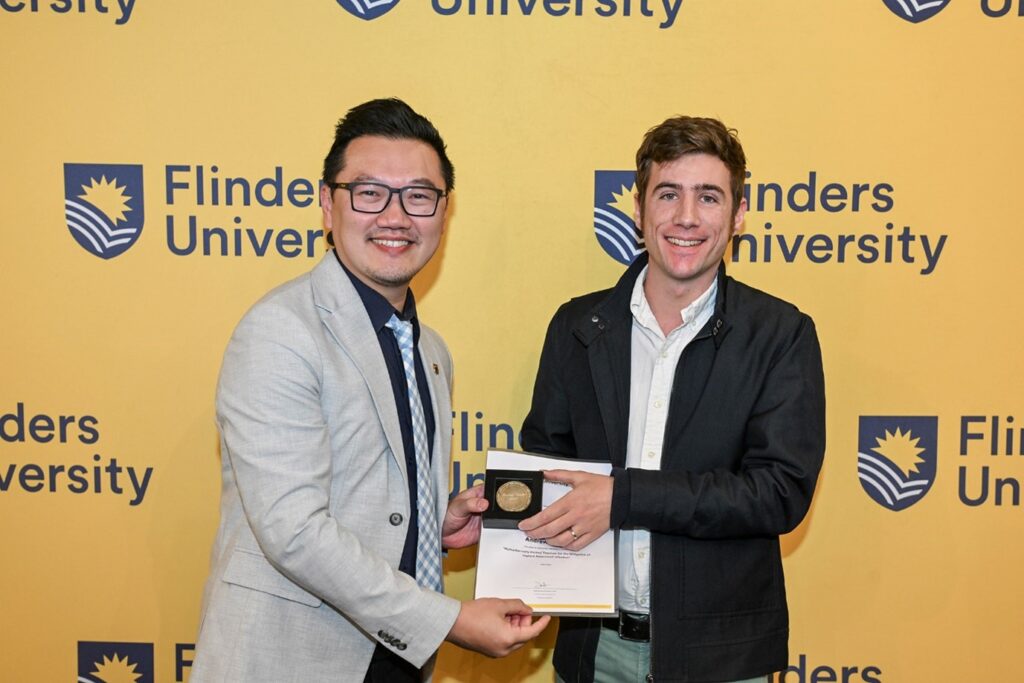
The first memorable experience that comes to mind is being awarded the Vice Chancellor’s Award for Doctoral Thesis Excellence. In my small immediate family I am the first to have even a university degree, so it is an honour to obtain such a high merit for a PhD. As for most memorable project, it would have to be the industry-based project to develop antimicrobial nanostructures on titanium implants. This project enabled me to develop my research skills as a new researcher, as well as be exposed to the commercial world beyond academia. Furthermore, the friends and memories made during this project will last a lifetime.
How do you like to relax or spend your spare time?
 I have a lot of interests outside of research and academia. I have enjoyed skateboarding for most of my life. I like to play badminton on Saturday mornings. I love taking my kids camping or doing various other outdoor activities. Sometimes I prefer to just sit in my garden with a coffee and watch my plants grow. It depends on the mood and time of year!