


For Flinders physiotherapy student Milaad Sobhani, an eight-week placement in Nhulunbuy, East Arnhem Land, wasn’t just about ticking off practical hours; it was a turning point in how he views healthcare.
Milaad, now in the final year of his Bachelor of Health Sciences/Master of Physiotherapy, worked with Yirrkala Aged Care, Australian Regional and Remote Community Services, Gove District Hospital, and Wamut Physiotherapy. His placement included day trips to remote communities like Ramingining and Milingimbi, reached by small charter flights across rugged Top End landscapes.
A Placement Beyond the Textbook
“Coming into the placement, I knew I wanted to immerse myself,” Milaad said. “I was open to challenge, eager to learn and ready to step outside my comfort zone.” That mindset shaped the experience, from hands-on clinical work to moments of cultural learning on Country with Yolŋu educators.


From Metro Mindset to Remote Reality
Physiotherapy in East Arnhem Land doesn’t follow a neat checklist. Milaad soon realised that standard treatment plans built in metro settings don’t always apply in community contexts. “We’re trained in Western health models, but I had to adapt and ask; how do these actually translate here?”
Listening, Learning, and Letting Go
At times, Milaad felt unsure about his professional contribution. “But I came to understand that listening, stepping back and building trust is part of the work. Being present mattered more than ticking clinical boxes.”


Cultural Connection as Clinical Strength
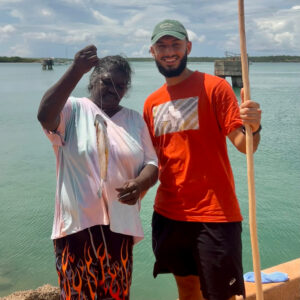
Each Thursday, Milaad and his peers joined Yolŋu educators to learn about language, bush medicine and sacred sites. This grounded approach shifted his understanding of health, from something clinical to something deeply relational. “We’re not just treating a diagnosis. We’re supporting a whole person shaped by culture, community and lived experience.”
A Call for Two-Way Learning
Milaad reflects that true healthcare in the NT means meeting in the middle, valuing Indigenous knowledge alongside clinical training. “Yolŋu people have already done so much to navigate Western systems. It’s our turn to step up, listen and learn.”