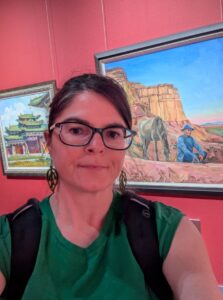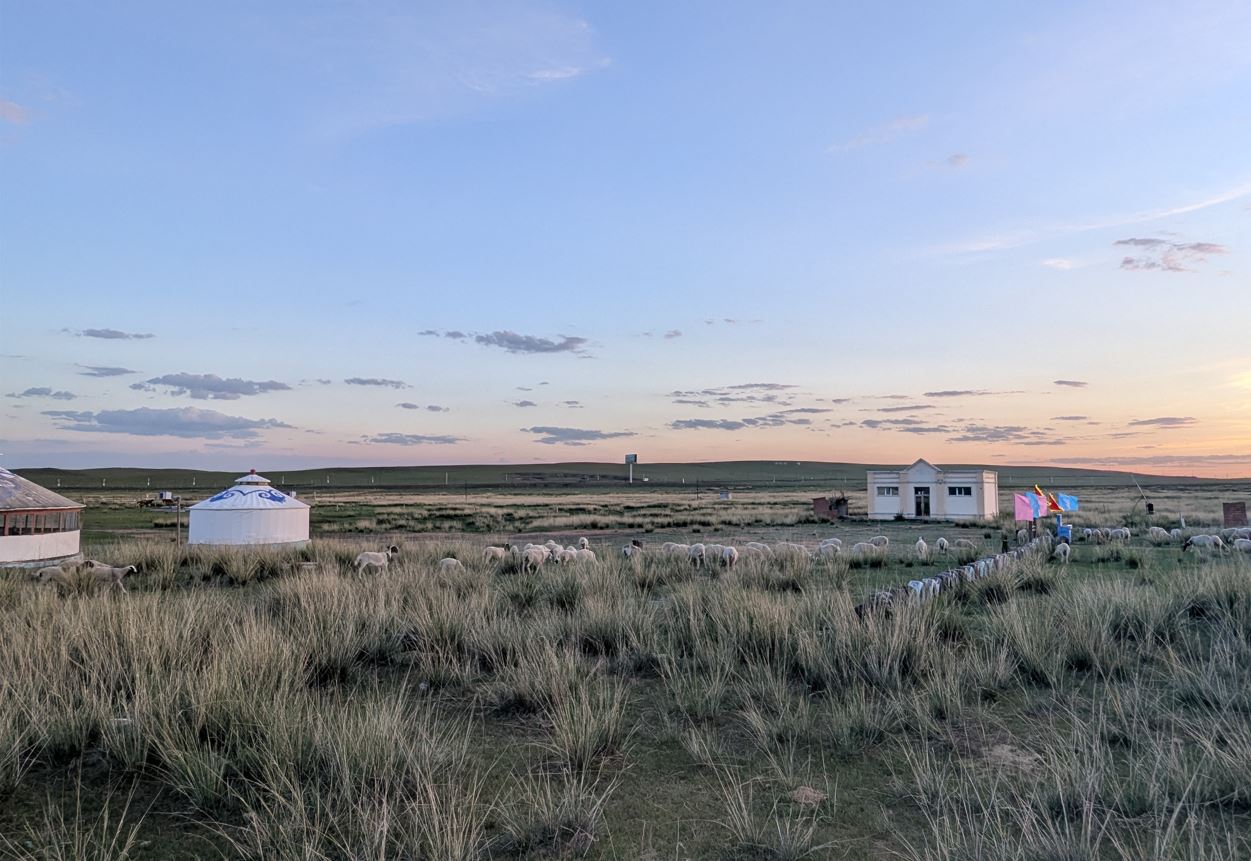
Photo credit: Katie – Mongolian Steppes
Katie from Flinders University, on a short term study tour -Environmental science and GIS investigations in Mongolian Steppes, Semester 1 2026. This program is supported through the New Colombo Plan and Destination Australia Cheung Kong Scholarships.
Over four weeks, I travelled across northern China as part of the Destination Australia Cheung Kong Exchange Program, visiting universities, research institutes, museums, grassland research stations and environmental restoration projects in Beijing, Tianjin, Hohhot, Baotou and Bayannur.
What began as an academic study tour quickly became much more than that. Along the way I found myself navigating crowded subway systems in Beijing, presenting research to Chinese academics, exploring the Great Wall, travelling on high-speed trains, and learning firsthand about environmental challenges ranging from water management in the Hetao irrigation system to grassland restoration and air pollution.
One of the highlights was visiting research institutions such as the Chinese Research Academy of Environmental Sciences and several field stations in Inner Mongolia. Seeing scientists working on real-world problems helped bring many of the concepts from my studies to life.
Visiting places such as the Forbidden City, the Lama Temple, the National Maritime Museum of China and the Inner Mongolia Museum provided insights into China’s history, culture and rapid modernisation. At the same time, the experience highlighted cultural differences in everything from public transport and personal space to technology use and daily life.
As someone who loves trains, China’s extensive high-speed rail network was a constant source of excitement. Travelling across vast distances while watching mountains, wind farms and grasslands pass by the window provided a new appreciation for the scale of the country and its investment in infrastructure.
Not every moment was easy. The pace of travel, language barriers, extreme summer heat and sensory overload were often challenging. Yet these experiences became valuable opportunities for reflection. The quieter moments, such as walking through an arboretum in Hohhot, watching sunsets over the grasslands, or simply sharing conversations with fellow travellers and researchers often proved just as meaningful as the formal visits.
The experience reinforced my interest in the intersection of environmental science, citizen science, research data and technology. It also reminded me that some of the most important learning happens outside the classroom, through conversations, observations and being willing to step outside familiar surroundings.
I returned to Australia with new knowledge, new ideas, a deeper appreciation for international collaboration, and a long list of topics I still want to explore. Most importantly, the journey strengthened my belief that addressing environmental challenges requires not only science and technology, but also curiosity, cultural understanding and collaboration across borders.
Katie was fortunate to be awarded a Destination Australia Cheung Kong Exchange Program Scholarship to support her overseas study experience.
Photo credit: Katie – Photos from the 4 week program in China.