


What does a future in research really look like?
At Road to Research 2026, students will have the opportunity to meet researchers, explore current projects and experience some of the tools and techniques used to answer important scientific and health questions.
Whether you are considering a placement, Honours, Masters or PhD, the event is a chance to speak directly with potential supervisors, learn about available opportunities and discover the many different directions a research career can take.
Here are just some of the researchers and activities students can explore at this year’s event.
Put your cycling performance to the test
 Prof. Andrew Rowland leads research spanning clinical pharmacology, precision medicine, exercise physiology and performance nutrition.
At his stand, students will be able to try a short cycling challenge using a Wahoo KICKR indoor cycling setup and see their power and performance data in real time. The demonstration will show how controlled exercise testing can be combined with blood samples, biomarkers and pharmacological measurements to investigate performance, recovery and adaptation.
Andrew supervises Honours, PhD and medical research projects, with opportunities to develop skills in areas including exercise testing, nutrition and supplement interventions, molecular biology, pharmacokinetic modelling and biostatistics.
Test your sports-nutrition knowledge
Dr Robyn Owen Jones investigates how training, nutrition and dietary supplements influence exercise metabolism, physiology and performance.
At her stand, students can take part in an interactive “evidence, emerging or ineffective?” challenge exploring commonly used performance supplements. They can also see examples of the equipment and measurements used in controlled cycling and exercise studies. Robyn can speak with students interested in potential Honours and higher-degree research projects in exercise science, sports nutrition, human performance and applied clinical research.
Taste how the gut talks to the brain
Prof. Damien Keating leads the Gut Sensory Systems research group, which investigates how the gut senses food, medicines and the gut microbiome.
His team studies how specialised cells in the gut wall send messages to the brain through the gut–brain axis, and how these signals may affect mood, behaviour and mental health.
At Damien’s stand, visitors can taste sugar or sugar-free lollipops while learning how cells in the gut detect dietary sugar and signal the brain through the vagus nerve. Opportunities are available for research placements, Honours and PhD students.
Discover what hoverflies can teach us about the brain
 Matthew Flinders Professor Karin Nordström and the Motion Vision Group investigate how the nervous system processes sensory information, with a particular focus on insect motion vision.
Their research includes hoverfly physiology, sleep deprivation, butterfly colour vision and the use of virtual reality environments to study insect behaviour.
Students visiting Karin’s stand will be able to see hoverflies and explore demonstrations of the techniques used by the research team. The group is currently recruiting Honours and PhD students and collaborates with industry and national and international research communities. The work also has a broader environmental connection. Hoverflies and butterflies are important wild pollinators that contribute to food security.
Explore research that could improve treatments for bladder disease
 Dr Luke Grundy leads the NeuroUrology Research Group, which studies the sensory nerves connecting the bladder and brain.
His team investigates how these nerves contribute to bladder pain, urgency and dysfunction associated with conditions including urinary tract infections and the side effects of bladder cancer treatment. The research brings together neuroscience, urology and oncology to identify and test potential new therapeutic targets.
Luke has Honours and PhD projects available across bladder cancer, cancer-treatment side effects, infection and nanoparticle drug delivery. Students can also ask about a fully funded PhD scholarship and learn about techniques including nerve electrophysiology, molecular biology and microscopy. Visitors may also learn an unexpected fact about bladder evolution: the ability to store urine may have helped mammals avoid revealing their location to predators.
See a tiny brain in action
 Assoc. Prof. Yee Lian Chew uses the microscopic worm C. elegans to investigate how brains learn, form memories and age.
At the Worm Neuroscience Lab stand, students will be able to see live worms wriggling under a microscope and watch videos of fluorescent worms with their brains illuminated.
The research team has opportunities available for placements, Honours, Masters and PhD research. Students can gain hands-on experience in molecular biology, behaviour, neural activity recording, microscopy, experimental design, data analysis and scientific communication. Despite having only 302 neurons, these tiny worms can learn and form memories—showing that a brain does not need to be big to do something clever.
Look inside the science of memory
Associate Professor Arne Ittner investigates the memory engram, the processes through which the brain forms, stores and recalls memories.
By understanding how molecules within brain cells contribute to memory, his research aims to identify new approaches to treating memory loss in conditions such as Alzheimer’s disease. Visitors to Arne’s stand can see the team’s latest research, look at brains through a microscope and gain first-hand insight into how scientists study molecules and memory. Honours, placement and PhD projects are available for students interested in neuroscience and memory research.
See miniature tumours growing in the laboratory
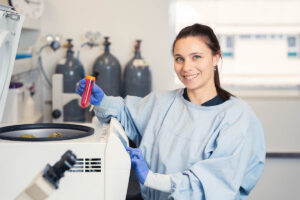 Research Fellow Ash Hocking works in the FHMRI Mesothelioma and Lung Cancer Lab, where researchers grow miniature versions of patients’ tumours known as organoids.
These organoids help the team investigate treatment resistance and predict how individual tumours may respond to chemotherapy and immunotherapy. The research uses techniques including flow cytometry, immunohistochemistry and functional assays. Visitors can view organoid cultures under the microscope and learn about available Honours and PhD projects in the laboratory.
Experience how psychoactive substances can affect perception
Research Fe llow Gianluca Di Censo conducts epidemiological research into psychoactive substance use in the Australian population.
Using large longitudinal datasets, his research examines patterns of alcohol, cannabis and methamphetamine use, as well as the factors contributing to their prevalence and consequences.
At Gianluca’s stand, students can take part in games while wearing goggles that simulate some of the effects of being under the influence of psychoactive substances. Students interested in substance-use research can also learn about developing data-analysis skills and pursuing a research career.
Discover how AI could help create the next generation of medicines

Dr Pramod Nair leads research combining computational and molecular pharmacology, artificial intelligence and genetics to discover and develop new medicines.
Students in his lab investigate how genetic variation influences drug targets and use computational modelling alongside laboratory experiments to identify potential treatments for neuropsychiatric disorders and cancer. At Pramod’s stand, visitors can explore interactive demonstrations and molecular visualisations, discuss current projects and learn about opportunities to build skills in AI-driven drug discovery and molecular pharmacology.
Discover how cancer cells outsmart treatment
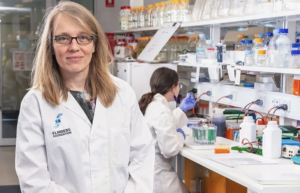
Matthew Flinders Professor Janni Petersen leads research into how cancer cells grow, survive and resist treatment.
Her team combines cell biology, genetics, biochemistry, advanced imaging and translational research to investigate the mechanisms that drive tumour progression and therapy resistance. The goal is to turn discoveries about cancer cell behaviour into potential new treatment strategies.
At Janni’s stand, students can explore advanced microscopy images of cancer cells, learn about the tools used to study cancer in the laboratory and discover how cell-biology research can contribute to new treatments.
Discover the tiny messengers advancing precision medicine
 Dr Adele Tanzi studies extracellular vesicles—tiny packages released by cells that can reveal information about tissue health, disease and treatment response.
At her stand, students can learn how these vesicles are isolated from blood and urine, studied in the laboratory and explored as potential biomarkers for precision-medicine liquid biopsies.
Adele can also discuss Honours and PhD opportunities in biomarker discovery, molecular biology and translational research.
Build the gut ecosystem with LEGO
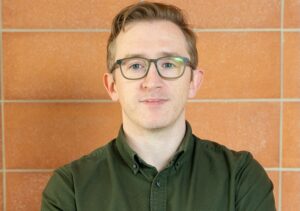
Senior Research Fellow Feargal Ryan uses large biological datasets to investigate how the body functions, what drives disease and why treatments work better for some people than others. His Computational Multi-Omics team works with DNA and RNA sequencing, proteomics and metabolomics, with a particular interest in how the gut microbiome influences health and treatment response.
At Feargal’s stand, students can use LEGO to build and map a cross-section of the gut, including microbes, the mucus layer, gut lining and immune tissue and explore how these different parts interact to shape the gut ecosystem. Students can also learn how research projects provide experience working with real biomedical datasets while building skills in bioinformatics, coding, statistics and biological interpretation.
Find your next step in research
Road to Research is more than an information event. It is an opportunity to:
- meet potential research supervisors
- explore current student projects and scholarships
- experience research demonstrations
- learn about the skills developed through research
- ask questions about placements, Honours, Masters and PhD pathways
- discover what working in research is really like
Don’t just hear about research, meet the people doing it and experience it for yourself.