

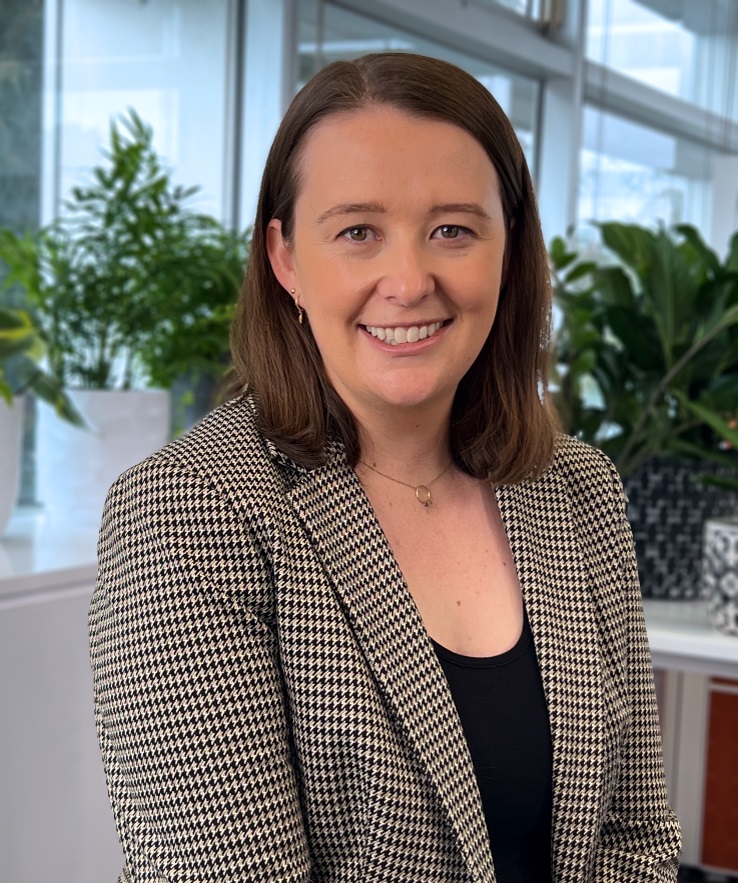
After recently appearing on the This Working Life podcast, we caught up with Director of the Flinders Workplace Wellbeing Lab and workplace bullying expert Dr Annabelle Neall to chat about optimising employee mental health, and how her family keep her grounded outside of work.
What is your role here at Flinders?
I am a Lecturer of Mental Health and Wellbeing (Workplace and Communities). I work with some fantastic colleagues in Psychology, Education, Social Work as a member of the Flinders Institute for Mental Health and Wellbeing. I’m also the Director of the Flinders Workplace Wellbeing Lab, where we explore all things healthy and safe work!
Tell us a little about your work.
As a researcher, my goal is to optimise employee mental health and wellbeing through the prevention of psychosocial hazards at work (e.g., workplace bullying, sexual harassment, violence, and stress) and the implementation of organisational systems that underpin sustained mental health and wellbeing. For example, I am an inventor of a risk audit tool and management program that identifies the root causes of psychosocial hazards and guides policy, procedure, and practice redevelopment – a product adopted by peak health and safety regulators, major food retailers and health departments across Australia.
As an educator, I love working with motivated and passionate students to explore how principles of social and organisational psychology can be applied to every day contexts. Research supervision is my favourite part of being an academic.
How’d you get into it?
I always enjoyed school and was fascinated by how behaviour could be influenced by those around us, so pursuing a career in psychology was a natural choice for me. Like many of my colleagues, I completed a Bachelor of Psychology with Honours and later pursued a PhD in 2014, working as a research assistant, tutor, and grants editor along the way. While I initially considered clinical psychology, my honours year showed me the immense satisfaction that comes from setting up the right systems for people’s health. Now, as an occupational health specialist, I support businesses in optimising mental health and well-being in a sustainable way, impacting thousands of individuals.
Congratulations on winning an award for Best WHS Health and Wellbeing Program 2024 – what did you win for?
In 2019, my colleagues from UniSA and UQ and I partnered with the Woolworths Group to set up Project WERC (Workplace Engagement Respect and Care). The program addresses workplace bullying and psychosocial hazards by focusing on the systemic root causes within the organisational structure, rather than treating bullying as solely an interpersonal issue. Through participatory co-design methods, employees collaborate to reshape their work environments, resulting in significant reductions in bullying exposure and complaints. Our randomised control trial of 60 Woolworths’ stores demonstrated a 24% reduction in bullying in trial locations compared to a 155% increase in control stores. The success of Project WERC has transformed Woolworths’ approach to psychosocial risks, serving as a model for broader organisational change and setting a new standard in workplace health and wellbeing.
What’s one thing you want people to know about your work?
In any organisation, even good people can struggle if the systems around them are flawed. Like apples in a bad barrel, individuals can be “spoiled” by toxic environments, leading to poor interpersonal interactions, decreased performance and psychological harm. To foster healthy relationships and collaboration, it’s essential to fix the systems first, ensuring a positive, supportive environment that values employees output in equal measure with their mental health and wellbeing – it’s easier to achieve than you think!
How do you stay motivated?
For me, motivation comes from balance. I believe that productivity and rest need to go hand in hand. I set clear goals but ensure I recharge with hobbies, exercise, and time with loved ones. This keeps me energized and helps avoid burnout. Celebrating small wins keeps me focused, and self-care is just as important as productivity (and research confirms this!).
What’s your favourite thing to do with your spare time?
Spare time is in limited supply these days, but I’m fortunate to spend my non-working hours with my family and friends, including my partner, energetic 2 year old son, and my beloved Wolfhound. I enjoy baking, home organisation, board game nights with friends, beach walks and binge-watching dramedies (drama-comedies).