

What is your role here at Flinders?
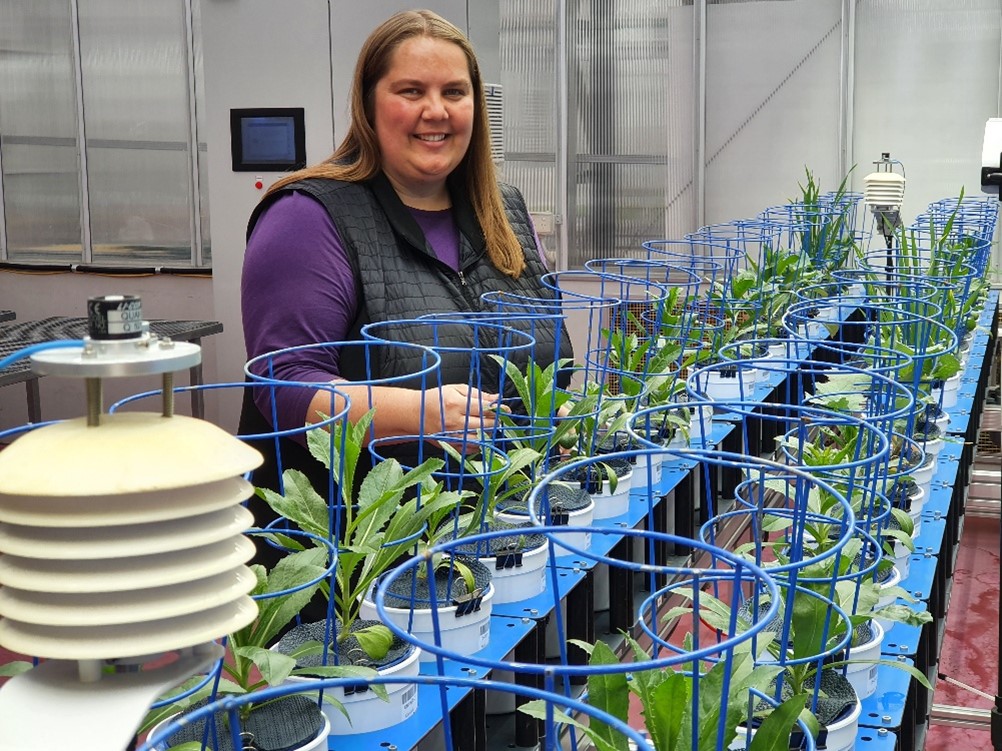
I recently commenced at Flinders as an Associate Professor in Agricultural Science (Agronomy) within the Office of the Deputy Vice Chancellor (Research) and College of Science and Engineering. The agriculture industry in Australia is expected to reach a gross value of $100B this year and the grains sector, particularly wheat, barley and canola production, is an important driver of this revenue. My role is focused on conducting agronomy research with growers and advisors to increase grain production on cropping farms across the low, medium and high rainfall zones.
What initially drew you to studying agricultural science?
I was raised on a mixed cropping and livestock property and have always enjoyed agriculture. My interests in research began following a summer scholarship during my second year of a Bachelor of Sciences (Agriculture Science). Farming businesses make a lot of decisions each day and being able to help provide data to support that decision-making to achieve the best production outcomes is something that drives what I do.
Tell us a bit about the impact your research can have on farming and the wider community.
There are many challenges (drought, heat, frost, soil constraints, nutrient availability, high input costs, weed, pest and disease pressures etc) that can reduce crop yields. I enjoy finding new solutions for these challenges to achieve more profitable and sustainable grain production. I founded the South Australian Drought Resilience and Innovation Hub (SA Drought Hub, $8M) to increase the extension and adoption of past research outcomes focused on increasing drought resilience on farms and in regional communities. The SA Drought Hub has over 60 partners and brings together researchers, farmers, agribusinesses, universities and state government agencies to collectively build drought resilience.
I also developed the South Australian Climate Resilience Discovery Farms and Innovator Sites (SA Discovery Farms, $8M) bringing together 40 partners to develop new innovations to improve drought resilience. The SA Discovery Farms involves a network of cropping, livestock and mixed farming research field trials established across commercial farms to test new drought resilience innovations with 57 long-term trials now established. It is focused on climate-smart grain and feed, soil health improvement practices, precision livestock strategies and increased landscape diversification.
What has been your career highlight to date?
Being able to directly work with growers and advisors to deliver outcomes that make an impact on the ground is something that I am fortunate to do. I have received many academic awards in my career to date but the highlight for me has been seeing grain growers adopt practices on their farms, based on findings from my field trial research.
What do you enjoy about working at Flinders?
I enjoy the supportive nature of the staff and students at Flinders and their focus on driving impact from both their research and teaching.
Tell us about your ideal weekend.
My ideal weekend would be spending time on the farm with my family – no phone or emails and just having good quality fun together.