


Congratulations to our newest Matthew Flinders Professors and Fellows.
A Matthew Flinders Professorship or Fellowship is awarded to individuals who have sustained outstanding research performance or scholarly, creative and artistic achievements, with a track record of distinguished contribution to research as evidenced by the awarding of external funding. Individuals must also showcase outstanding service to the University, professional or public life in the form of research leadership, mentorship of other researchers or supervision of HDR students.
The six individuals named have been recognised for service to their fields of academic expertise and to the University.

2026 Matthew Flinders Professors
Professor Luke Selth, College of Medicine and Public Health, Head of Prostate Cancer Research within the Flinders Health and Medical Research Institute (FHMRI). Professor Selth has established an internationally-recognised research program focused on understanding and targeting androgen receptor signalling in prostate cancer, investigating cancer cell plasticity and how it leads to therapy resistance, and testing the efficacy of novel drugs for prostate cancer. His leadership as Co-Director of FHMRI’s Cancer Impact program is marching towards a cancer-free future.
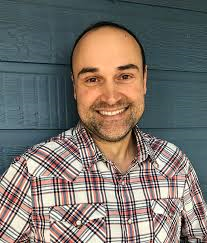
Professor Liam Brady, College of Human Sciences and Culture, Director of the Australian Research Council Training Centre for Archaeology in the Resources Sector. Professor Brady is the Lead Chief Investigator for the ARC Linkage project, Investigating the archaeological values of Marra cultural heritage sites, and Chief Investigator for ARC Discovery Indigenous, Indigenist Archaeology: new ways of knowing the past and present. His leadership in research and teaching and mentorship through higher degree supervision continues to contribute to our understanding of Indigenous material culture.
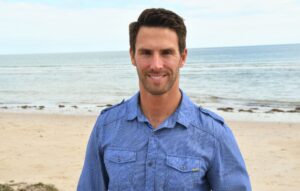
Professor Charlie Huveneers, College of Science and Engineering, and Director of Flinders University Marine and Coastal Research Consortium. Professor Huveneers who also leads the Southern Shark Ecology Group, leads research focusing on the ecology and population status of sharks and rays. He is currently leading research into positive and negative shark-human interactions, providing empirical information to minimise the effects of wildlife tourism and test the efficacy of shark bite mitigation measures.
Matthew Flinders Fellows

Associate Professor Kalinda Griffiths (FRSN) is a Yawuru woman living and working on Larrakia Country. She is a cancer epidemiologist and the Director of Poche SA+NT, where she leads a program of work focused on strengthening the governance, quality, and ethical use of Indigenous population-level data to improve health systems, equity, and outcomes. Professor Griffiths is an NHMRC (EL2) Leadership Fellow and a Senior Atlantic Fellow for Social Equity, holds a Visiting Fellowship at the Centre for Big Data Research in Health, and an Honorary Fellowship at the Menzies School of Health Research, where she co-leads the Ramaciotti Training Centre supporting the development of STEMM capability in regional and remote Australia. Her leadership is directed towards reforming systems so they better serve Aboriginal and Torres Strait Islander peoples and communities.

Associate Professor Natalie Harkin is a Narungga woman and poet who works within the Indigenous Studies team in the College of Human Science and Culture. In her position as Research Fellow, she is engaging archival-poetic methods to research and document Aboriginal women’s domestic service stories and labour histories in South Australia, as well as actively working towards decolonising state archives. Associate Professor Harkin is an active member of the First Nations Australia Writers Network, and her words have been seen and heard at exhibitions around the world. Her leadership and work inspires us to think and feel differently about South Australia’s history.

Associate Professor Zhongfan Jia, College of Science and Engineering, is an associate professor in chemistry who is leading three current ARC Discovery Projects, the newest of these is researching the, Polymer desalination batteries. For the past three years he has been leading the ARC Discovery projects: Folding polymers for high-performance energy storage and Unusual trisulfide chemistry. His leadership in research focuses on using use advanced chemistries to build well-defined macromolecular structures for a sustainable environment, clean energy storage and green catalysis.