

Short summary of your poster/research
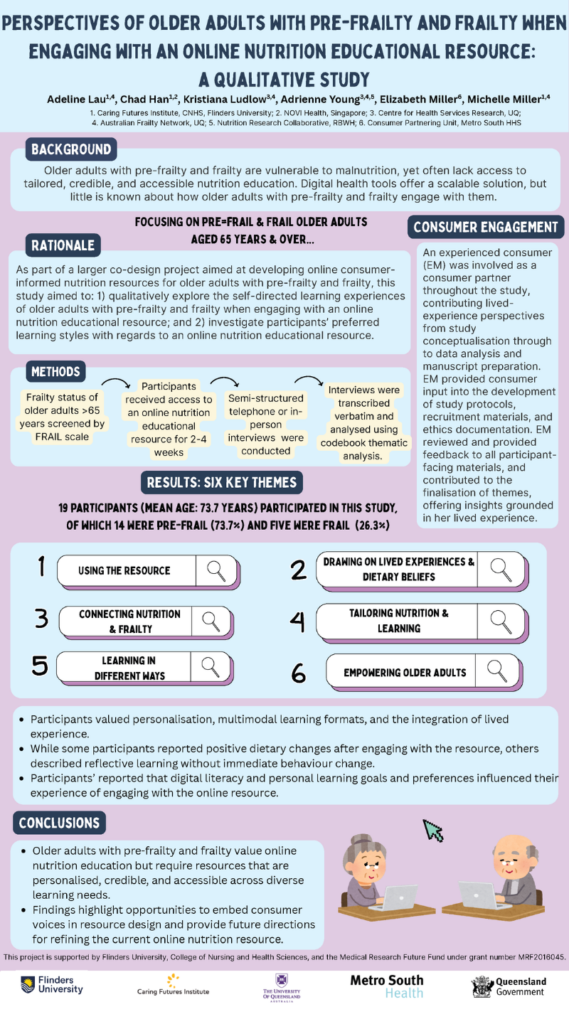
My research explores how older adults living with pre-frailty and frailty engage with an online nutrition education resource. While digital health tools are often promoted as scalable solutions, we still know relatively little about how this specific group experiences them. Through interviews with participants aged 65 and over, I examined their self-directed learning experiences and preferences. The findings highlight that while older adults value accessible online nutrition information, they benefit most from resources that are personalised, easy to navigate, and presented in multiple formats. Importantly, the study also underscores the value of incorporating lived experience into the design of these resources.
What was a highlight of the conference?
One of the highlights for me was the keynote sessions, particularly those focused on the future of doctoral education and research training. The discussions around “future-proofing the PhD” and rethinking graduate researcher capability really resonated with where I’m at in the final stages of my candidature. I also really enjoyed the mix of formats across the program, which created a more interactive space to exchange ideas with other HDR students and researchers. It felt like a genuinely collaborative environment rather than just a series of presentations.
What are the key takeaways you’ll bring back to your studies?
A key takeaway for me was the growing emphasis on translating research into real-world impact. Many presentations focused not just on findings, but on implementation — how to make interventions usable, sustainable, and scalable in practice. It’s prompted me to think more critically about how my work can move beyond the research setting and genuinely support older adults in their everyday lives.
What is something fascinating about your research?–
One of the most fascinating aspects has been seeing how differently individuals engage with the same resource. Some participants made immediate dietary changes, while others described a more reflective learning process that didn’t necessarily translate into behaviour change right away. It really highlights that learning isn’t one-size-fits-all, and that personal context, motivation, and digital confidence all shape how people engage with health information.
Do you have any advice for fellow HDR students?
Don’t underestimate the value of talking about your research — whether that’s at conferences, with peers, or even outside academia. Explaining your work to different audiences can help clarify your thinking and often brings new perspectives. Also, try to stay open to where your research might evolve, as some of the most meaningful insights come from unexpected directions.