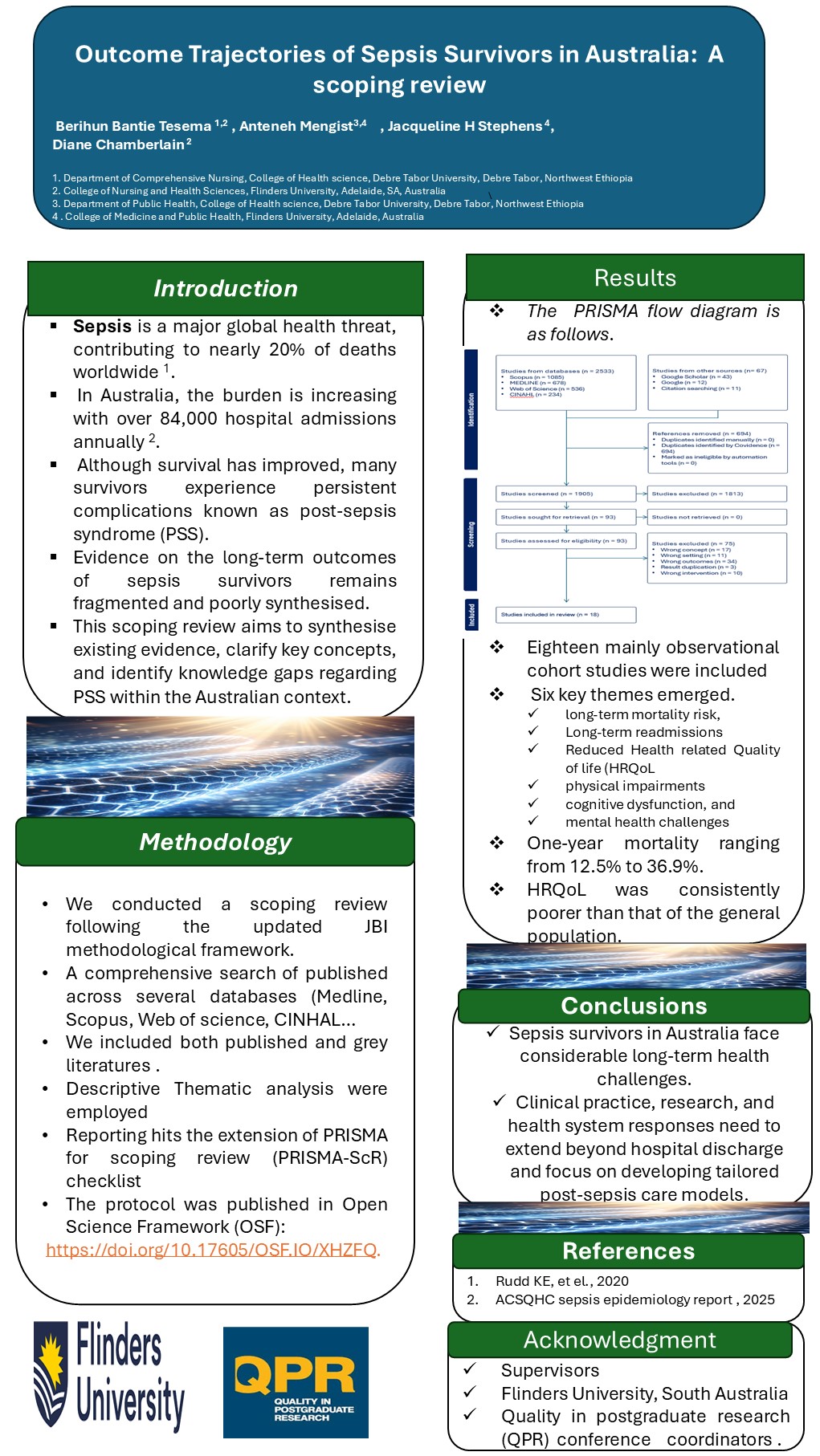


Short summary of your poster/research
Sepsis is a life-threatening medical emergency, but recovery does not always end after hospital discharge. Many survivors experience ongoing physical, psychological, and cognitive complications, known as post-sepsis syndrome (PSS), which can increase the risk of readmission, reduced quality of life, and shortened life expectancy.
Despite growing recognition of these long-term impacts, research on post-sepsis outcomes in Australia remains limited and fragmented. Therefore, our scoping review aimed to map the existing evidence, clarify key concepts, and identify important knowledge gaps related to post-sepsis syndrome and survivorship outcomes in Australia.
The review included 18 studies and identified six major themes related to the long-term outcomes of sepsis survivors, including increased mortality risk, hospital readmissions, reduced quality of life, and ongoing physical, cognitive, and mental health complications. Overall, the findings showed that sepsis survivors in Australia experience substantial long-term health challenges after hospital discharge.
The review highlights the need for healthcare systems, clinical practice, and future research to move beyond acute hospital care and strengthen tailored post-sepsis follow-up and rehabilitation services.
What was a highlight of the conference?
One of the main highlights of the conference was the opportunity to share ideas, experiences, and perspectives on how to improve graduate research in the future. I especially enjoyed connecting with researchers, supervisors, policymakers, university leaders, and HDR students from different disciplines and engaging in discussions about doctoral research, supervision, and research trainings.
The keynote speeches, roundtable discussions, and presentation sessions were particularly valuable, as they provided meaningful opportunities to exchange ideas and reflect on ways to strengthen the quality and future direction of postgraduate research.
What are the key takeaways you’ll bring back to your studies?
One of the key takeaways from the conference was that doctoral research is increasingly shaped by political, social, and cultural uncertainties, highlighting the importance of supportive supervision, collaboration, diverse perspectives, and effective research communication in maintaining high-quality postgraduate research. The conference also reinforced the role of doctoral researchers in shaping future research, policy, and practice, while encouraging thoughtful and ethical use of generative AI in research and data presentation.
What is something fascinating about your research?–
One interesting findings of my research is that surviving sepsis does not always mean full recovery. Many survivors continue to experience long-term health challenges that remain under-recognized, highlighting the importance of improving survivorship care beyond the hospital setting.