

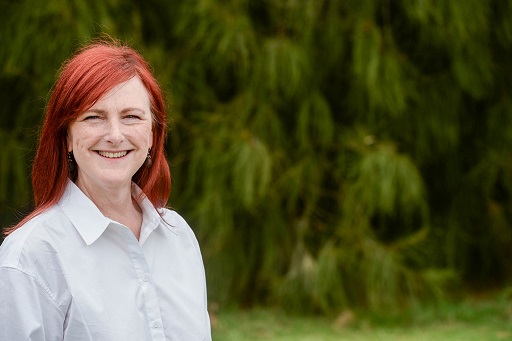
Dr Raechel Damarell is Senior Lecturer in Clinical Education and Senior Research Fellow with CareSearch and palliAGED, providing evidence-based palliative care resources. A member of RePaDD and Bibliography Editor for Progress in Palliative Care, she has 25+ years’ experience translating research into practice, with a focus on making palliative care evidence accessible and impactful.
What is your role and what does your work focus on?
I’ve just joined the Prideaux Discipline team as Senior Lecturer in Clinical Education. We offer fully online postgraduate topics that prepare clinicians to become leaders in education and training across diverse settings. In my balanced role, I’m looking forward to contributing to both teaching and research, working with the team to identify grant opportunities and lead innovative projects that advance health professions education.
Where did you work and / or study before joining CMPH / Flinders?
I was Senior Research Fellow and co-investigator with CareSearch, a national Commonwealth-funded project that provides evidence-based information and resources to support quality palliative care for health professionals, patients, families, and carers. It is based in the College of Nursing and Health Sciences. I continue to contribute to this work, as well as being a member of the Research Centre for Palliative Care, Death and Dying.
What inspired you to pursue a career in your current field, and how has your passion evolved over time?
I began my career at Flinders as a librarian specialising in evidence-based practice, which sparked a long-standing interest in how health evidence is created, accessed, and applied. Over the past 25 years, my work has focused on the full lifecycle of evidence, from its effective retrieval and synthesis to translation and use in clinical and policy decision-making. My research has explored how GPs make decisions for patients with multimorbidity, especially in the absence of clear evidence, and how evidence can better support care in complex contexts like palliative care. What continues to drive me is a passion for ensuring that evidence is not only accessible but also usable and impactful where it matters most.
Can you share a memorable experience or project from your career that had a significant impact on you or the community?
One of the most meaningful aspects of my career has been bridging the gap between academic research and lived experience. As researchers, we can sometimes feel removed from the real-world challenges we study, but opportunities like the recent RePaDD Roundtable, where multidisciplinary aged care sector leaders and workforce came together to discuss the implications of the coming Support at Home end-of-life pathway—have grounded my work in the realities of care delivery. Similarly, presenting on staff burnout at the Palliative Care Nurses Australia conference and hearing from nurses that my talk gave voice to their struggles was a powerful reminder of how research can validate, inform, and support those on the front lines.
How do you like to relax or spend your spare time?
After watching my daughter’s flamenco classes and performances for the past 15 years, I recently decided to give it a go myself and love it. The classes are both energising and challenging, and I’ve come to appreciate flamenco not just as a dance, but as a rich cultural tradition that blends music, movement, and storytelling rooted in Spanish history.