

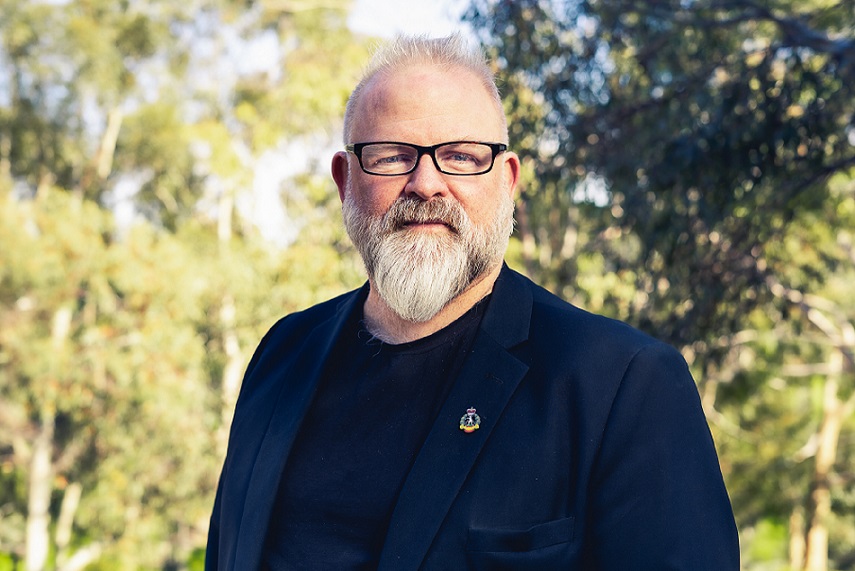
What is your role here at Flinders?
I am a Professor of Defence and Veteran Studies in the College of Human Sciences and Culture. In that role I started the Open Door: Improving the Wellbeing of Veterans, Public Safety Personnel and their Families research initiative. As Director and renowned researcher I conduct research, supervise HDRE students, engage with national media and sit on numerous committees, advisory groups and boards. My aim is to bring greater methodological diversity to this sector by elevating a social, cultural and historical focus to veteran and family wellbeing.
What initially drew you to studying sociology?
When I separated from the Army in 1992 I had many questions about militaries. This included the rank or class structure, the role of the military in our society, the destructive character of warfare and its implications for gender, race and empire. I was particular interested in masculinity studies. I started a psychology and sociology degree and sociology answered the questions I had about those issues, which led me to postgraduate research and a Phd.
Tell us a bit about your research into the wellbeing of veterans, and perhaps share some insights about Open Door.
I am focused on establishing a social and preventative health approach to veteran and family wellbeing. Alongside this I have led the growth of critical military studies in Australia. My health and wellbeing focus is policy based and aimed at improving the ways that we understand and support veterans and their families. My critical military studies is more focused on scholarly deconstruction of war, military service, gender, race and empire. Globally we, often men, lead nations to war without finding alternatives. I want to expose these ruling relations to a wider audience.
What has been your career highlight to date?
My career highlight is probably the way in which the Royal Commission into Defence and Veteran Suicide picked up on my work. My research was heavily referenced in the final report and this grew my reputation in the field. That now leads to many other opportunities to contribute. My first research direction was uncovering military sexual assault which in the first ten years received poor press from higher powers. But that is no longer uncontested terrain and I was happy to be asked to present to the ADF War College in April 2016 to 200 mid-career officers on these challenges. Change can take time but there are rewarding elements when it is picked up.
What do you enjoy about working at Flinders?
I have studied and worked at Flinders since 1994 after leaving ANU in Canberra when I separated from the ADF. Flinders is a leading research institution and have always had a strong focus on social justice and making a difference. This makes academic work feel worthwhile and gives a strong sense of purpose to my work. Other than that, I have met many great people, good leadership and had the opportunity to teach and work with many great students.