


New to Flinders for 2026? This post is for you. I promise it doesn’t require much more than a couple of minutes of your time.
Hi!
My name’s Gareth.
I’m a psychologist at Flinders, and I’m responsible for BetterU, a wellbeing hub for students. Which if you are reading this post, you are technically reading BetterU (go you!!)
BetterU does a few different things:
- The site itself links students to wellbeing supports and hosts regular articles written by staff and students on different wellbeing topics.
- Then, BetterU team members (find us here) run campus events and wellbeing programs, contribute to wellbeing strategy at Flinders, and fairly regularly appear through guest lectures and workshops in topics across different degrees.
Depending on what you’re studying, there’s a reasonable chance you’ll see me (Gareth) at some point in one of your topics (I apologise in advance for my occasionally dishevelled appearance).
And while I would love to tell you in detail about everything we do, Orientation is actually not the time for that.
Why is that?
Orientation is a whirlwind 🌀
I used to sit near the Orientation team, and I can tell you they work all year just to make this short period of the university year full of activity AND run smoothly.
This means, at Orientation, everyone wants your attention – your topics, support services, clubs, the library, student groups and associations, passing ducks, and plenty of friendly local vendors too.
There’s so much to do and take in that you’ll be spoilt for choice.
So breathe easy, there’s nothing you need to do for me.
For now, I simply want to welcome you to Flinders!!
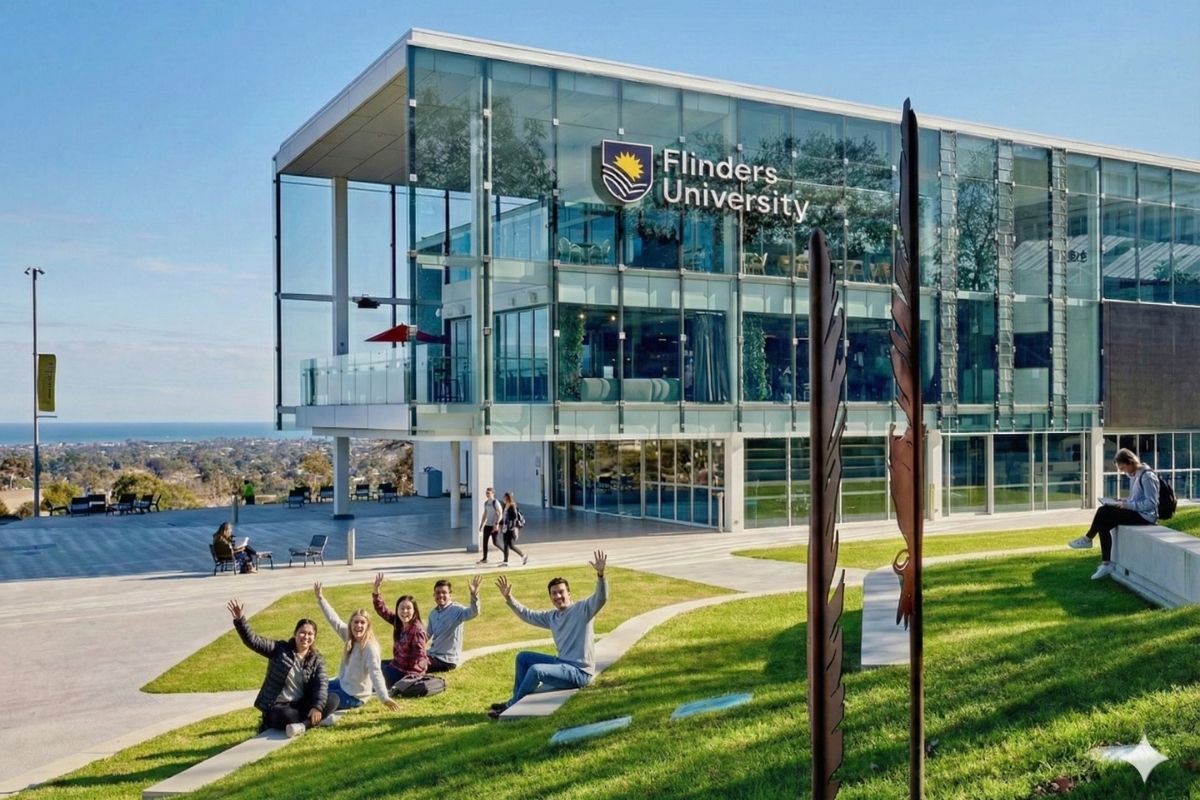
Once you’re feeling settled and have some study momentum, if you’re curious about wellbeing, self-development, or what we do at BetterU, you’ll be very welcome to explore it — later.
I will offer you some deliberately unglamorous advice 🥱
You’ll hear plenty of advice during Orientation. So much, in fact, that you’ll probably switch off from it at some point.
Not to be left out, I do have some advice – admittedly quite unglamorous – but early on, it’s the unexciting stuff that counts.
At this stage, my advice is very practical:
- Get a diary or digital calendar
- Start adding important dates (especially assessment due dates)
- Schedule in your lectures and tutorials
- Begin organising your time, even roughly, including setting aside plenty of blocks for ‘study’, fitting them in-between your existing responsibilities
- Log into your topics (FLO/Canvas) and start looking around
- Read the documents your topic coordinators tell you to read
- Check your email regularly and read all of them (at least early on)
- To help with this, the Library’s orientation slides are a great start
None of this is the colourful part of university life (unless you love organising things like I do, in which case you might get a bit of a buzz from it).
But these are the things that get you started.
Think of it like starting a new job.
For those who’ve worked before, the early days of a new job can be pretty mundane: computer access, inductions, signing forms, reading manuals, completing training. Not exciting, but essential.
Once those things are done (or at least underway), they open you up to the more interesting and rewarding parts of the role: the work itself and the people you’ll meet.
University works in a similar way.
If you put some early energy into the foundations – understanding your topics, organising your time, and getting comfortable with the systems you’ll be using every day (email, student pages, Okta, FLO, etc.) – you give yourself much more freedom later on.
Because I assure you, the year races by. Students (and staff, to be honest) are often surprised by how quickly the academic year moves. Setting off at a steady academic pace early can make a real difference. You can always dial the intensity back later if needed.
And don’t worry that focusing on the academic side early means you’ll miss out on everything else university life has to offer. If you get off to a good start academically, one of two things usually happens:
a) you become genuinely interested in what you’re studying and don’t worry much about the other stuff
b) you feel confident enough with study that you can start branching out and sampling other cool things
(In case you’re curious — when I studied, I fell into category a. I got so interested in my topic that I didn’t really pay attention to much else.)
One support service worth flagging early 🚩
There is one wellbeing-related service I do like to mention at this early stage: Disability Support Services.
If you have a health condition or mental health condition that you think may affect how you study, the support you need, or how assessments are managed, they’re well worth speaking to sooner rather than later. Early conversations make later adjustments much easier.
Visit their website to learn more about what they do, what they offer, and how you can make an appointment to speak to a Disability Advisor.
And later on… 👋🏻
If (or when) you feel like doing some self-improvement or self-development, you’re very welcome to come back and visit BetterU. Or say hi if you see me in a topic or say hi to Jamie or Magnolia (BetterU team members) at a campus event down the track.
There really is plenty of interesting, meaningful, and enjoyable stuff waiting for you at university – student associations, clubs and sports, campus events, topic-related activities, professional development opportunities, and spaces to explore wellbeing and personal growth.
Getting the foundations in place early doesn’t take you away from those things. It makes them easier to enjoy once you are ready to join in.
It’s genuinely great to have you as part of the Flinders community.
If you have questions, are feeling a bit stuck, or just want to say hi, feel free to drop me a message: gareth.furber@flinders.edu.au
Otherwise, have a great Orientation and I’ll see you around.
Take care,
Gareth
