

I had this little mini essay come to me whilst I was responding to emails, so I smashed out a basic draft, got AI to give me a good proof-read and edit, and voila! One of those rare, but enjoyable times when a writing idea arrives almost fully formed.
I recently submitted a potential chapter for an upcoming book on flourishing. It was my first piece of more formal academic writing since 2016.
I didn’t procrastinate too badly on it, but there were certainly moments when I delayed. And when I reflected on those moments, I realised that the thing I was most afraid of was not the writing itself. It was the possibility of discovering that I am no longer able to write academically.
That got me thinking about an interesting dynamic in procrastination.
When we talk about procrastination, we often assume that doing the thing (e.g. assignment) is good and not doing the thing is bad. And, at one level, that is true. If you have an assignment to submit, working on it is generally better than avoiding it. Submitting it is generally better than not submitting it.
But psychologically, it is more nuanced than that.
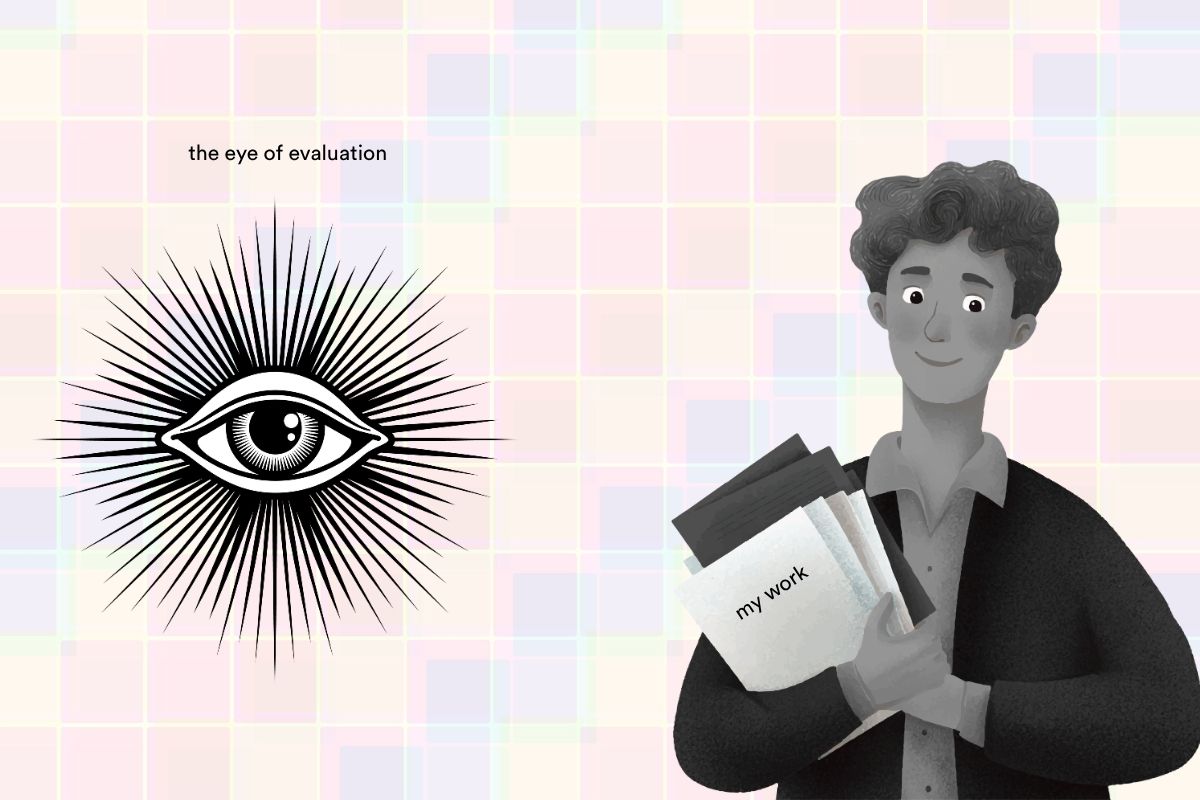
In academic life, submitting a piece of work means opening yourself up to evaluation. It means giving someone else the chance to assess your knowledge, your skill, your effort, your argument, your writing, your understanding. It is a critical part of the learning process, but that doesn’t mean it necessarily feels emotionally safe.
Submitting the work creates the possibility of discovering something uncomfortable: that you are not where you hoped you were.
When we delay, we sometimes remain in a different kind of safety. If I don’t write the chapter, I can stay safely in the belief that I am “just procrastinating”. That is not a great identity to carry around. Most people who chronically procrastinate would happily let that part of their identity go, if they could. But for the nervous system, it may still feel safer than finding out that the work itself is not good enough.
In other words, procrastination (‘I am a procrastinator’) can protect us from a more painful self-story (‘I don’t have what it takes yet to do this work’).
It can feel safer to be “someone who procrastinates” than to be “someone who tried properly and was found wanting”.
That does not mean this is the whole story of procrastination. Procrastination is complex. It can involve motivation, workload, perfectionism, tiredness, distraction, boredom, uncertainty, poor task design, low confidence, competing demands, and many other things. But I think this particular pattern is worth naming. And I am naming it now because I recently lived it.
Sometimes we procrastinate because doing the work exposes us. It exposes our current level of skill. It exposes gaps in our understanding. It exposes whether the idea in our head can survive contact with the page. It exposes whether other people see the value in what we have made.
For me, the chapter review might come back with bad news. They might reject it. They might think it needs major changes. They might not write, “this is a turd 💩”, because reviewers generally don’t write that (they might think it though), but the message might still land that way.
And yes, that would hurt. It would be a hit to my academic ego. It would shake up how I feel about myself and my work. It would reveal that my time away from academic writing has come at a real cost.
But it would also give me information. It would tell me something about where my academic writing currently sits. It would show me what I may have lost after years away from that kind of writing. It might show me what I need to rebuild. It might help me make a more informed decision about whether I want to return to that kind of work, and what it would take to do so.
Not writing the chapter would have protected me from that feedback. But it would also have closed down all those other pathways.
And I think the same applies to students sitting with an assignment they are avoiding.
Submitting an assignment can feel risky because it creates the possibility of discovering something uncomfortable. Maybe the mark will be lower than expected. Maybe the feedback will reveal gaps. Maybe the work will not match the image you had of yourself. Maybe you will have to confront the fact that you did not understand the topic as well as you hoped.
So the procrastinator label can become a refuge.
“I’m just a procrastinator.”
It is not a happy refuge, necessarily. But it can feel safer than saying, “I gave this a genuine attempt, and now I have to see what comes back.”
This kind of safety is really costly. And often you need to have lived it in some way to get it. I’m old enough and ugly enough to have taken refuge in that kind of safety in the past and then lived out the consequences, the lost opportunities.
With age and experience, you learn that there is far more growth and opportunity in an honestly written but badly received assignment than there is in not submitting it, or in submitting something half-hearted so you can protect yourself with the thought, “well, I didn’t really try anyway.”
A real attempt gives you information. It gives you feedback. It gives you a next step. It gives future you something to work with.
Avoidance gives you relief, but not direction.
So if you notice yourself procrastinating, it may help to ask: what am I being protected from here?
Am I avoiding the task itself? Or am I avoiding what the task might reveal about me?
That question matters because it shifts procrastination from being an identity to being a behaviour. Instead of “I am a procrastinator”, it becomes “I am a student who sometimes procrastinates when a task feels exposing.” That is a much more workable place to stand. Because behaviours can be studied. Patterns can be noticed. Drivers can be understood. Skills can be built.
You might still feel anxious. You might still want to delay. You might still have the urge to retreat into the safer self-story.
But you can also choose to take a swing.
Not because the outcome is guaranteed to be good, but because there are more pathways available to the version of you who tries, submits, learns, adjusts and continues than there are to the version of you who stays protected by never quite finding out.
Procrastination may be your nervous system trying to keep you safe. But in academic life, and probably in many other parts of life too, the safer choice in the long term is often to put the work out there.

As a student who was procrastinating by reading this article, I was confronted by how deeply truthful Gareth’s article felt. Thank you for this inspiring message, it’s given me a new wind to have a crack at that assignment – and won’t leave me any time soon!
Thank you for the kind message Ruby. I am chuffed that it has been helpful and wish you the best with that assignment.