

Why Art Can Be Therapeutic 🎭
Art has always been a powerful way for people to express emotions and connect with themselves. The history of art therapy shows how creativity can become a form of healing. In the early 20th century, Margaret Naumburg, known as the “mother of art therapy,” introduced the idea that free art expression could reveal inner emotions and support psychological wellbeing. Her sister Florence Cane encouraged the use of movement and sound in the creative process to inspire imagination, while Edith Kramer believed in “art as therapy,” seeing art-making itself as a healing journey. Their work laid the foundation for using art as a tool for emotional growth and self-discovery (Junge et al., 2015).
One of the most inspiring figures who embodied this spirit is Frida Kahlo (Courtney et al., 2017), the Mexican painter known for turning pain into art. Her life was filled with hardship. She contracted polio as a child, was badly injured in a bus accident at eighteen, and struggled with illness and disability for most of her life. Yet Frida never lost her love for life. With her striking black eyebrows, bright flower crowns, and colourful Mexican dresses, she radiated confidence and passion. Even when she was bedridden, she continued to paint. For her, painting was not only an artistic pursuit but also the best form of therapy – a way to face her suffering and transform it into strength and beauty. Her famous work Viva la Vida (“Long Live Life”), painted shortly before her death, reflects her courage and her deep appreciation for life despite all the pain.
Similar artistic healing power is also reflected in a group art therapy (GAT) project researched by Skop et al. (2022), which provides support for women who have experienced intimate partner violence. The project was carried out in a domestic violence prevention institution, providing a safe and symbolic space for participants to express their emotions, explore their trauma, and reconnect with themselves through creation. Many women lost their self-identity after years of abuse, but in the 12-week GAT project, they gradually began to face their emotions, disintegrate their psychological defenses, and rebuild their inner strength. In the process of writing at their own pace, participants used visual metaphors to express their feelings and expectations for the future. The group environment promoted reflection, emotional release, and a growing sense of strength and autonomy.
This study further shows that art therapy is important because it provides a nonverbal, symbolic, and safe way for individuals to deal with complex emotions and traumatic experiences. Compared with traditional talk therapy, artistic creation can help people express their inner experiences that are “difficult to say” or “not ready to use language to describe.” Through colours, shapes, images, and symbols, the creator can let emotions flow naturally without logical organization, thus reducing psychological pressure, promoting emotional adjustment, and opening up new possibilities for the healing process.
Simple Art-Based Exercises for Student Wellbeing 🖌️
Recognising the therapeutic potential of art, students can also benefit from simple creative practices in daily life. You don’t need to be an artist to experience the positive effects of creativity. Below are some accessible art-based activities inspired by expressive arts therapy and wellbeing research:
Self-awareness & Emotional Expression
🎭 Dream Sketching:
When you wake up, jot down any images, symbols, or scenes from your dreams. Then, sketch them quickly — don’t worry about perfection. This helps you explore subconscious thoughts.
✏️ Free Association Drawing:
Start with a random shape or doodle on a blank page. Add lines, colors, or patterns without planning. Let your hand move freely and see what emerges.
🌈 Colour Flow Painting:
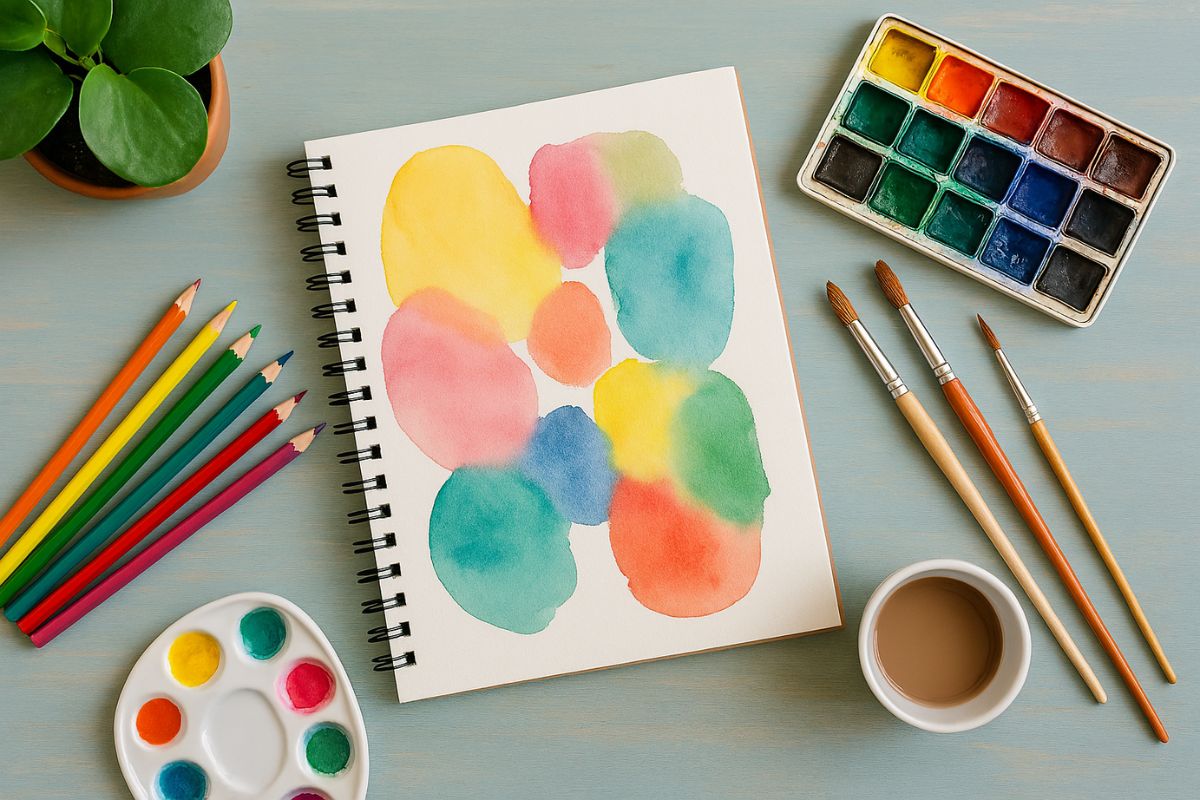
Use watercolors or diluted acrylics. Pick colors that match your mood and let them blend naturally across the page. Notice how the colors interact — this can reveal emotional states.
🔍 Symbolic Drawing:
Choose a simple symbol (like a circle, tree, or wave) and repeat it across the page in different sizes or colors. Reflect on what the symbol means to you.
💧 Watercolour Mood Painting:
Paint abstract shapes using soft washes of color. Layer light and dark tones to express shifting feelings. Great for calming seasonal stress.
🖐️ Body-Scan Drawing:
Sit quietly and notice sensations in your body. Trace the outline of your body (or just a hand or foot) and use colors or textures to represent tension, warmth, or emotions in each area.
Connection & Community Building
😊 Kindness Sketching:
Observe a small act of kindness during your day — like someone holding a door or sharing a smile — and sketch it quickly. It’s a way to notice and celebrate positivity.
🎨 Community Mural:
Gather friends or classmates and choose a theme (e.g., “Hope” or “Nature”). Each person adds their own section to a shared canvas or wall. This builds connection and creativity.
📖 Story-Exchange Drawing:
Swap a short personal story with someone. Then, draw an image inspired by their story while they draw yours. Share and discuss your interpretations.
💌 Art Card Exchange:
Create small hand-painted postcards with uplifting messages. Give them to friends or leave them in public spaces for others to find.
🌐 Online Drawing Chain:
Start a digital sketch and send it to a friend. They add something and pass it on. Keep the chain going — it’s playful and connects people even across distance.
These activities support mindfulness, creativity, emotional regulation, and community belonging – perfect for university students navigating stress, transitions, and academic demands.
Creative Spaces at Flinders: The Art Club 🎨
At Flinders University, the Art Club (FUAC) provides a welcoming and inclusive environment for all students — whether they are experienced artists or simply exploring art for the first time. According to FUSA, the Art Club is a free, student-run special interest and social club that is open to everyone. The club offers a range of opportunities, including access to art materials, regular creative meet-ups, and a relaxed space where students can connect with others, share ideas, and unwind from academic pressures.
The Art Club holds weekly sessions on Tuesdays from 11:30 am to 1:30 pm in the Oasis Common Room at the Bedford Park campus, as noted on the club’s social media platforms. These gatherings allow students to experiment with painting, drawing, and other creative activities in a supportive atmosphere.
In addition to the Art Club, students can further enrich their artistic journey by visiting the Flinders University Museum of Art (FUMA), which features one of the largest university art collections in South Australia. Together, the Art Club and FUMA create a vibrant creative ecosystem on campus, offering students meaningful opportunities for self-expression, inspiration, and wellbeing.
Get Involved: Share Your Creativity 🌈
As the examples and research above show, creativity can be a powerful form of healing and self-discovery. Students are encouraged to join the Art Club, participate in workshops, and explore the emotional and social benefits of art-making. Whether through watercolour, collage, ink drawing, photography, or sketching, every form of art has the power to tell a meaningful story.
Join the Art Club — and let your colours tell your story
References
Courtney, C. A., O’Hearn, M. A., & Franck, C. C. (2017). Frida Kahlo: Portrait of Chronic Pain. Physical Therapy, 97(1), 90–96. https://doi.org/10.2522/ptj.20160036
Junge, M. B., Rosal, M. L., & Gussak, D. E. (2015). History of Art Therapy. In (pp. 7–16). John Wiley & Sons, Ltd. https://doi.org/10.1002/9781118306543.ch1
Skop, M., Darewych, O. H., Root, J., & Mason, J. (2022). Exploring intimate partner violence survivors’ experiences with group art therapy. International Journal of Art Therapy, 27(4), 159–168. https://doi.org/10.1080/17454832.2022.2124298