


With mid-year break approaching, I delve, once again, into the world of leisure.
As we head into the mid‑year break, I’m guessing many of you already have plans locked in — work, travel, rest, socialising, staring at the ceiling.
If that’s you, sweet. I particularly like the sound of that ceiling one.
If you’re still deciding how to spend the next few weeks, here’s a gentle invitation to think about your leisure time a little more strategically. I’ve actually done this before, as leisure is a topic I’m increasingly interested in.
I recently read a review article (Takiguchi, Kikutani, & Matsui, 2023) looking at the psychological impact of leisure across the lifespan. Three big takeaways stood out.
First, leisure is best understood as the things we choose to do in our free time because they feel meaningful, enjoyable, or satisfying. The study emphasises that leisure is subjective — it isn’t defined by the type of activity, but by the value the person places on it. What counts as leisure for you might not count as leisure for me. Whether it’s sport, music, gaming, art, volunteering, or simply spending time with friends, leisure reflects who we are and how we like to spend our time outside of our obligations.
Second, leisure matters because it reliably supports two pillars of psychological functioning: subjective wellbeing and cognitive health. Across many studies, leisure has been shown to increase positive emotions, build resilience, strengthen social connection, and provide opportunities for autonomy, mastery, and meaning. It also contributes to cognitive functioning through mental stimulation, social engagement, and physical activity. While leisure isn’t essential for basic survival, the authors describe it as a “crucial contributor toward a successful life.”
Third, leisure choices made early in life shape how we function later on. The activities you engaged in as a child have likely influenced your interests and skills as an adult. And the choices you make now about how to use your spare time will shape how well you age. In this sense, leisure isn’t just a life add‑on — it’s one of the quiet forces that shapes our developmental trajectory.
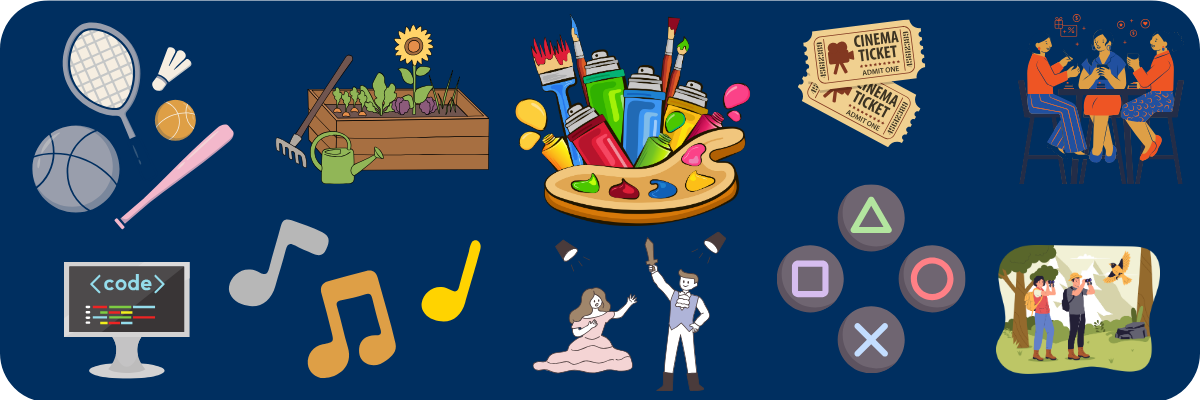
I’m old enough and ugly enough to have seen all three of these in my own life. I’ve been fortunate to have had a number of leisure activities across the years (art, exercise, gardening, computers, music). I’ve seen how they’ve helped me develop useful skills, provided escape from daily challenges, and shaped later stages of my life.
For some of you, your leisure patterns are already in motion — music, sport, gaming, volunteering, art, gardening, hiking, coding. Breaks like the upcoming mid‑year break are a chance to deepen those interests.
For others, leisure might have been more accidental than intentional. If that’s you, the mid‑year pause might be the perfect moment to explore something new.
One of the easiest ways to do that at university is through clubs. They’re low‑pressure, low‑cost, social, and full of variety — sport, culture, creativity, activism, games, faith, performance, and more. If you’re curious, the FUSA club list is a great place to browse: https://fusa.edu.au/clubslist/. Someone from FUSA mentioned recently that clubs ran over 1500 events in 2025, so there’s plenty happening.
To be clear, despite the title of the post, you don’t have to join a club. One of the risks of discussing leisure in an academic way is turning it into another lifestyle factor you “should” pay attention to, potentially stripping it of its fun. But if you’re looking for something that’s enjoyable now and quietly beneficial later, experimenting with leisure is a pretty good bet. Just focus on finding things you enjoy — not what other people (including me) tell you should enjoy.
[✍🏼If you’d be interested in writing an article for BetterU on the interplay between your leisure life and your study life, please consider getting in touch – gareth.furber@flinders.edu.au]
Reference
Takiguchi, Y., Kikutani, M., & Matsui, M. (2023). Evaluating positive effects of leisure from a life-course perspective: A literature review. Psychologia et Sociologia, 65(1), 35–57. https://doi.org/10.2117/psysoc.2022-B027