


I’ve recently been pondering whether I should do some volunteering. I think it might be because of this article by Social Work student Jenny who writes about her experiences of volunteering and the importance of this “third place” for our wellbeing.
Hey hey ~ Flinders folks.
Welcome back to all returning students, and a warm welcome to those joining Flinders for the first time! If you’re new here, you may still be figuring out where your classes are, how FLO works, or why every building seems to have a different name.
⭐⭐⭐⭐⭐⭐
As a student, I can understand that starting university is exciting and overwhelming at the same time. Finding a sense of belonging is an important part of settling in and making campus feel a bit more like home.
During the final weeks of my placement with BetterU, I learned about the concept of a “third place” – a space outside of home and university or work where people feel connected, comfortable, and part of a community. As soon as I heard the term, I realised I already had one: volunteering.
What started as “I’ll just help out for a few hours” gradually became a place where I found familiar faces, meaningful conversations, and a sense of belonging. So, let’s explore what a third place is, why volunteering might just become yours too, and what opportunities are waiting for you.
What is a “third place”?

- First place = home
- Second place = work or university
- Third place = a space where you feel connected, welcomed, and like you belong. Somewhere you go because you want to.
Third places provide opportunities for social connection, belonging, and community. These spaces can be cafés, sports clubs, youth groups, community centres, libraries, hobby groups, and volunteer organisations.
When you’re far from home, you’re not just adjusting to a new university or country, but also trying to find a place where you belong. Maybe this is why the idea of a third place resonates with so many international students like me. A third place cannot replace home, but it can become a small piece of home in a new environment — somewhere familiar, welcoming, and full of people who make you feel connected.
For me, that place became a Red Cross op shop near my rental. When I first started volunteering, my role was fairly simple: sorting donations, organising clothes and shelves, and learning how the shop operated. Over time, I became more comfortable chatting with customers, working alongside other volunteers, and sharing small conversations throughout the day. What surprised me was how quickly familiar faces became familiar names.
Many may ask: “When was the moment you realised this was your third place?”
I guess I had found my third place when I started looking forward to my volunteer shifts, not because I needed to go there, but because of the people. I wasn’t just showing up to “help others” anymore. I was returning because I felt connected. Over time, colleagues started to feel like family. We share the same vibes, the same values, support one another, and work towards a common purpose of supporting the community.
Looking back, I think it was the accumulation of small moments, like being greeted by name, sharing stories over a tea break, and noticing that people were genuinely happy to see me. That’s when I realised the op shop had become more than a place where I volunteered. It had become a place where I belonged, a small piece of home for me.
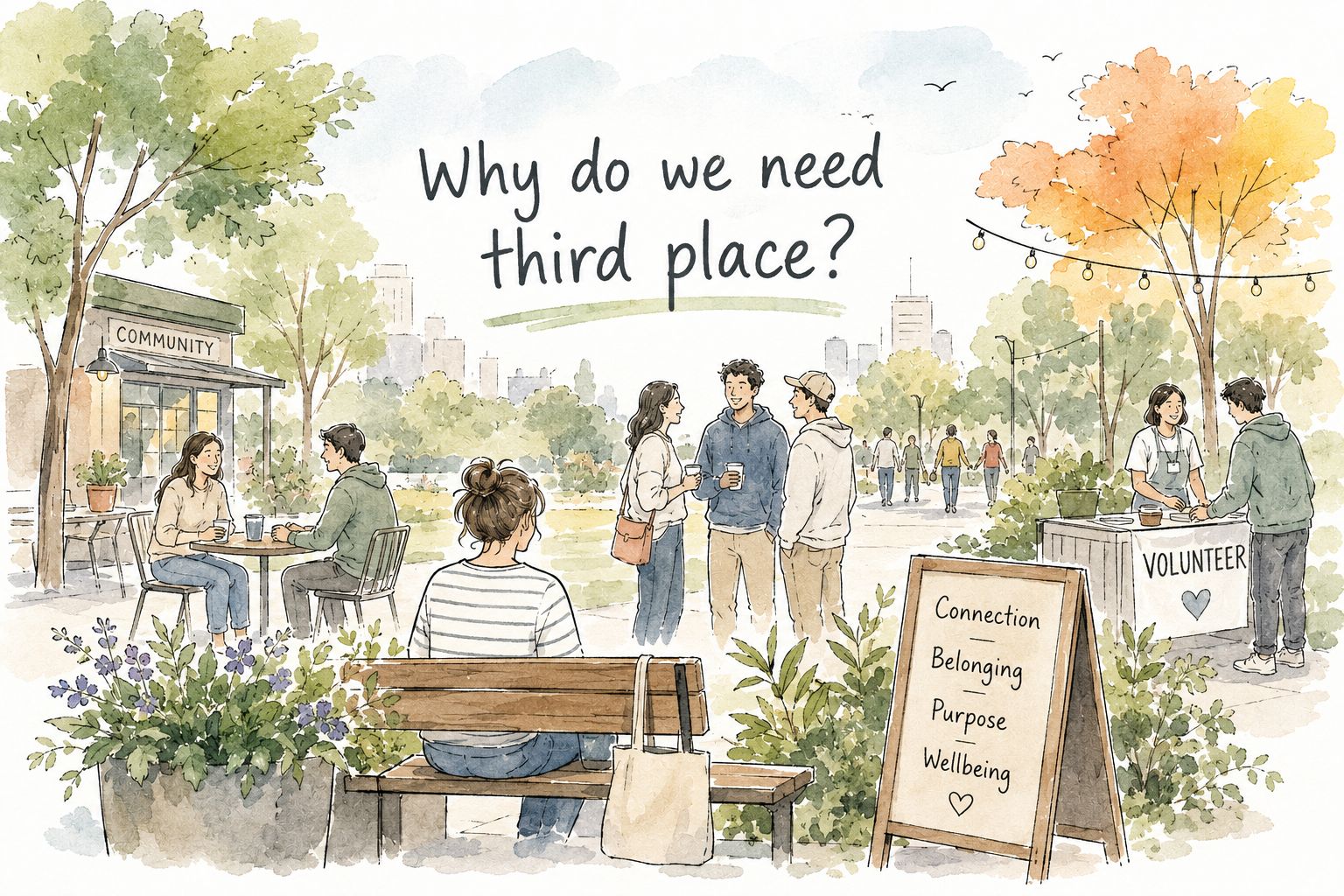
Why do we all need a third place?
Most of us spend our days moving between home, university, and work. It’s productive, but it can also feel a little limiting when so much of our identity is tied to these roles.
Third places fill the gap. They give us opportunities to connect with different people, explore different interests, and build a sense of self beyond study, work, or other responsibilities. They’re often the places where people know your name, notice when you show up, and miss you when you don’t.
That sense of belonging isn’t just a “nice-to-have”. Research links it to better mental health, higher life satisfaction, and lower rates of depression. Connections are powerful.
Third places matter because they help us feel connected, supported, and part of something bigger than ourselves.
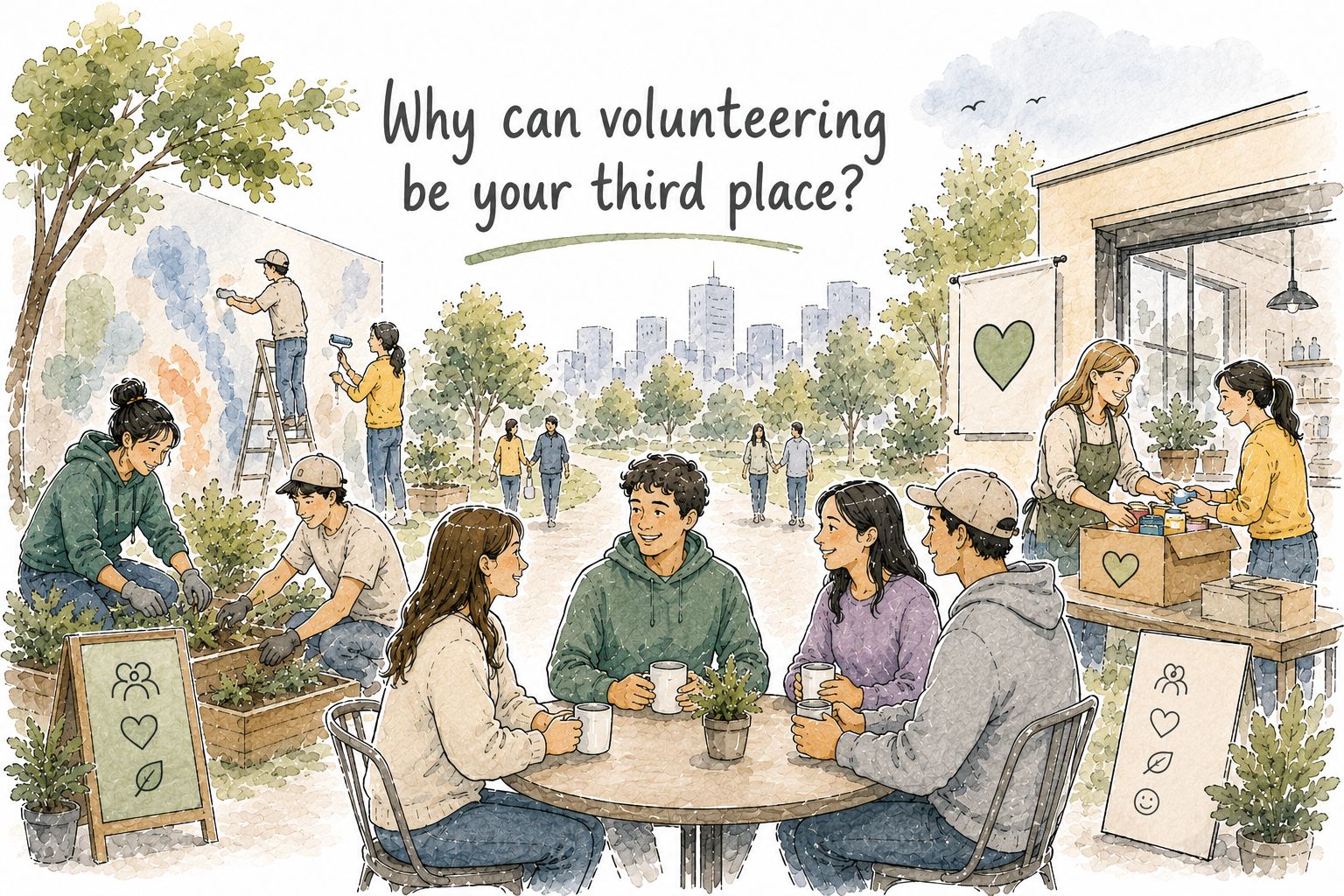
Why can volunteering be your third place?
Looking back, I realised volunteering gave me a chance to express my curiosity and constantly learn new things. It gave me a sense of, “I have my people to support, my team to share knowledge with, my customers to talk with, and my place to happily be.”
Research backs this up. A review of 28 studies (Nichol et al., 2023) found that regular volunteers consistently report:
- Stronger sense of community and belonging: You can build friendships, social support networks, and meaningful connections with others.
- Greater sense of purpose and self-worth: You can contribute to a meaningful cause while feeling appreciated, valued, and useful.
- Routine and engagement: Volunteering provides structure, regular activities, and reasons to leave the house and engage with others.
- Reduced depression and better life satisfaction: Once you achieve the above, your life satisfaction can improve. Volunteering strengthens wellbeing and creates a greater sense of fulfilment in everyday life.
The belonging comes first, and everything else follows.
You can ease into this like a warm bath. It’s way more flexible than you think. And honestly? A couple of hours a week is plenty. If you can’t make it one week, just let your people know in advance. Trust me, they’re not going to chase you down or bite you. Life happens, and volunteer organisations genuinely get that.
Maybe you try one thing. Maybe it’s not your vibe, and you never go back. That’s completely valid, and also a great story to keep with you.
Maybe you end up sorting donated clothes next to someone who becomes one of your favourite people. 😄 You never know.
💒 Ready to find your space?
At Flinders:
- Get involved through Student Clubs
- Ask your course coordinator if there are any peer mentoring programs in your degree
- Drop into Oasis on campus. They have snacks 😉and volunteering opportunities

Beyond campus:
Volunteering SA&NT was the platform I used to find my current third space. Just jump onto the website and click “Search for positions in SA”. It connects us with roles across South Australia in community, environment, arts, health, and more. Yes, even that niche thing you’re into.
Good news: Working With Children Checks and police checks are free for volunteers. 😉

You don’t need to volunteer every week or commit to a long-term role. Sometimes finding a third place starts by showing up to a single event, meeting a few new people, and discovering a community where you feel comfortable returning. For me, that sense of belonging grew over time and, before I realised it, I’d found a place where I felt connected, valued, and part of something bigger than myself. We call it a community.
References
Nichol, B., Wilson, R., Rodrigues, A., & Haighton, C. (2023). Exploring the Effects of Volunteering on the Social, Mental, and Physical Health and Well-being of Volunteers: An Umbrella Review.
Picture credit: Oasis, Volunteering SA, AI-generated pictures.
My other articles
[Editor’s note: Enjoyed this article? Jenny wrote two more whilst on placement with BetterU. I recommend you check those out]
📸 When Words Feel Heavy – Finding Yourself Through a Photo
💸Financial Wellbeing and Student Life – how small mental shifts can save you dollars